When Housewives Became Point-Hacking Pioneers: The Trading Stamp Empire That Built American Wealth

The Original Rewards Game
While today's consumers debate whether to chase airline miles or cashback percentages, their great-grandmothers were already playing a far more sophisticated version of the same game. In the 1930s, as America struggled through the Great Depression, an army of housewives quietly built family wealth one grocery trip at a time — not through extreme couponing, but through something called trading stamps.
S&H Green Stamps weren't just a marketing gimmick. They were America's first mass-market loyalty program, and the women who mastered them were the original point hackers.
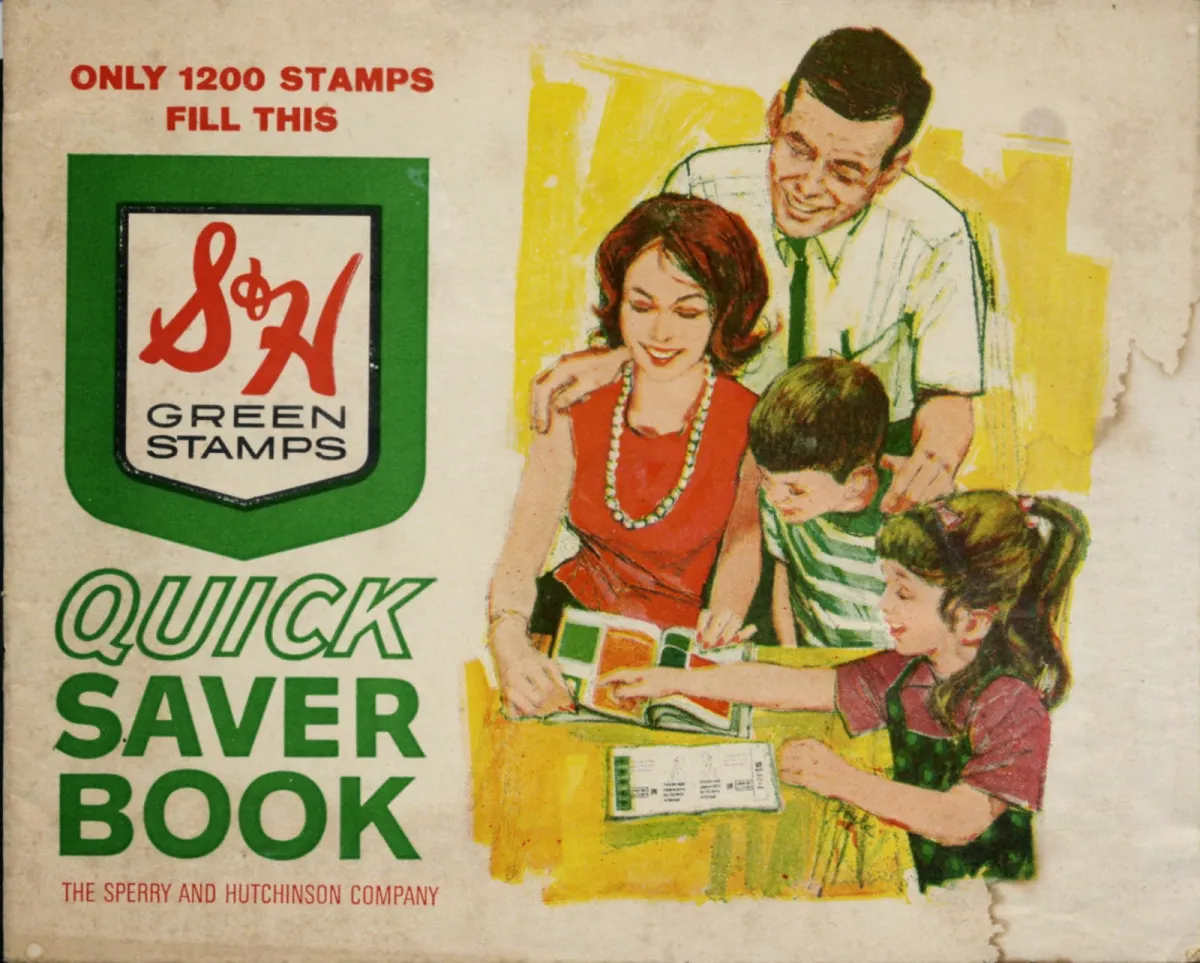 Photo: S&H Green Stamps, via 1.bp.blogspot.com
The System That Turned Shopping Into Saving
Here's how it worked: Every time you spent a dollar at participating grocery stores, gas stations, or department stores, you received stamps worth roughly 1-3% of your purchase. Fill up a book with stamps, and you could redeem it for merchandise from massive catalogs featuring everything from toasters to television sets.
What made this different from today's loyalty programs wasn't just the physical stamps — it was the scale and the strategy. By the 1960s, S&H Green Stamps was printing three times more stamps than the U.S. Postal Service was printing postage. The company's redemption centers were so valuable they were considered the largest purchaser of consumer goods in America after Sears Roebuck.
 Photo: Sears Roebuck, via logos-world.net
But the real genius wasn't in the company's business model. It was in how ordinary American women turned stamp collecting into a sophisticated wealth-building strategy.
The Neighborhood Networks
Depression-era housewives didn't just collect stamps individually — they organized. Informal networks of women would pool their stamps to reach redemption thresholds faster. Some neighborhoods developed elaborate trading systems: Mrs. Johnson might trade her gas station stamps for Mrs. Peterson's grocery stamps to complete a book for a specific appliance.
These weren't casual arrangements. Women kept detailed records, tracked which stores offered bonus stamp promotions, and timed major purchases around double-stamp days. They understood concepts like "category optimization" and "bonus multipliers" decades before financial advisors started using those terms for credit card rewards.
Building Real Wealth Through Everyday Spending
The numbers were impressive. A dedicated stamp collector could accumulate enough value to furnish an entire home without spending additional cash. One estimate suggested that a typical family spending $50 per week on groceries and gas could redeem $150-200 worth of merchandise annually through stamps — equivalent to roughly $2,000 in today's money.
More importantly, the stamp system created a forced savings mechanism. Unlike cash, stamps couldn't be easily spent on impulse purchases. They accumulated until families reached specific redemption thresholds, effectively automating the process of converting daily spending into durable goods.
Why the System Disappeared
Trading stamps began declining in the 1970s, killed by a combination of factors that sound familiar to anyone watching today's retail landscape. Discount retailers like Walmart offered "everyday low prices" instead of stamps, arguing that customers preferred immediate savings over delayed rewards. Credit cards made it easier to buy appliances directly rather than saving stamps for months.
But the real death blow came from changing shopping patterns. As more women entered the workforce, fewer had time for the careful planning and social coordination that made stamp programs work. The system that had turned household management into a wealth-building strategy became viewed as old-fashioned busy work.
The DNA Lives On
Every loyalty program on your phone today traces its ancestry back to those green stamps. The core insight — that businesses can profitably give customers a small percentage of their spending back in exchange for loyalty and data — never changed. Only the delivery mechanism evolved.
Modern loyalty programs are actually less generous than their stamp predecessors. Where S&H offered 2-3% back in merchandise value, most store loyalty programs today offer 1-2% in points or cash. The difference is convenience: you don't need to coordinate with neighbors or plan purchases around bonus promotions.
What We Lost in Translation
But something important was lost in the transition from physical stamps to digital points. The old system required planning, community coordination, and delayed gratification — skills that built broader financial literacy. When women tracked stamp promotions and coordinated neighborhood trading networks, they were developing the same analytical skills that successful investors use today.
Modern loyalty programs are designed for individual convenience, not community wealth building. We gained simplicity but lost the social learning that made stamp collecting a pathway to broader financial sophistication.
The next time you mindlessly tap your rewards credit card, remember the housewives who turned grocery receipts into furniture stores. They were playing the same game you are — they just played it better.