Before Washington Got Involved, Virginia Farmers Had Already Solved Crop Insurance
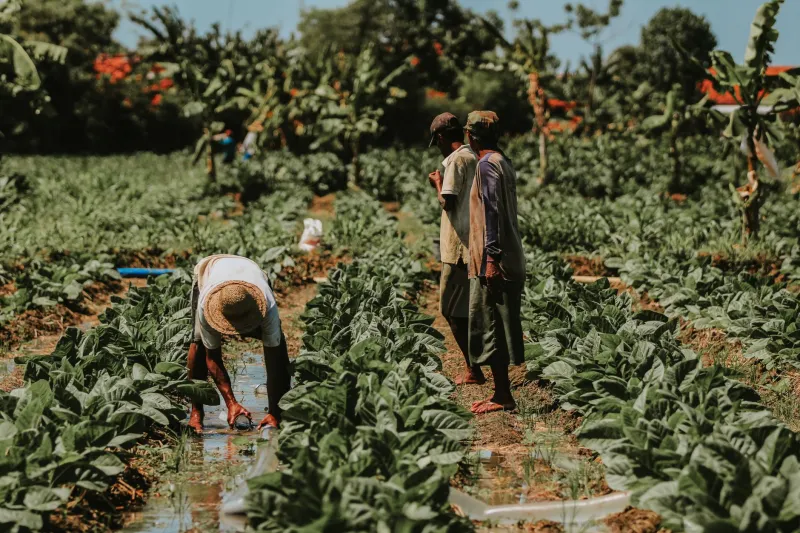
Somewhere in the early 1900s, a group of Virginia tobacco farmers sat around and solved a problem that would take the federal government another three decades to officially acknowledge. They didn't call it crop insurance. They didn't file any paperwork with Washington. They just agreed to share the pain — and it worked remarkably well.
Most people assume crop insurance was a New Deal invention, something Franklin Roosevelt's administration cooked up to rescue Depression-era farmers from catastrophic losses. That's the official story. But buried in the cooperative records of Virginia's tobacco belt is a much older, much scrappier version of the same idea — one built by farmers themselves, long before any bureaucrat thought to take credit for it.
The Problem That Made Farmers Get Creative
Tobacco farming in the early twentieth century was brutal business. A single bad frost, a fungal blight, or a stretch of summer drought could wipe out an entire season's income in a matter of days. Small growers had almost no financial cushion. Banks weren't exactly lining up to offer agricultural credit to tenant farmers or smallholders, and what credit existed came with terms that could trap a family in debt for years.
So farmers did what communities do when institutions fail them: they improvised.
In several Virginia counties, tobacco cooperatives began organizing informal risk pools as early as the 1900s and into the 1910s. The mechanics were straightforward. Member farmers contributed a small portion of their expected harvest value — sometimes in cash, sometimes in pledged tobacco — into a shared fund administered by the cooperative. If a member suffered a severe crop loss from weather or disease, they drew from the pool. If the season went well across the board, contributions rolled into the following year's reserve.
It wasn't sophisticated by modern actuarial standards. But it was functional, and crucially, it was community-governed. The people deciding who qualified for a payout were the same people paying into the fund. That accountability kept abuse minimal and trust high.
What Made Their Model Genuinely Clever
What's striking about these early cooperative arrangements isn't just that they existed — it's how well-designed they were given the resources available.
For one thing, the pools were hyper-local. Members farmed similar soil in similar microclimates, which meant their risk profiles were reasonably comparable. A catastrophic flood affecting one farm was likely affecting neighboring farms too, which forced the cooperatives to build reserves carefully rather than assuming losses would always be isolated. They understood correlated risk intuitively, even if they'd never heard the term.
They also built in participation requirements that modern insurance designers would recognize as loss-prevention incentives. Members who followed cooperative guidelines on planting practices, soil management, and disease monitoring received more favorable terms. Farmers who ignored best practices and then filed claims repeatedly found their membership reviewed. It was a rough but effective version of what insurers today call underwriting standards.
Perhaps most importantly, the cooperatives didn't just pay out cash. They helped struggling members source replacement seed, negotiate with buyers, and plan the following season's planting. The financial tool and the community support network were the same thing.
How Washington Absorbed the Idea Without the Acknowledgment
The Federal Crop Insurance Act of 1938 is typically presented as a Roosevelt administration innovation — a response to the Dust Bowl and the broader agricultural catastrophe of the 1930s. And in terms of scale and federal backing, it certainly was new. But the structural logic it borrowed was not.
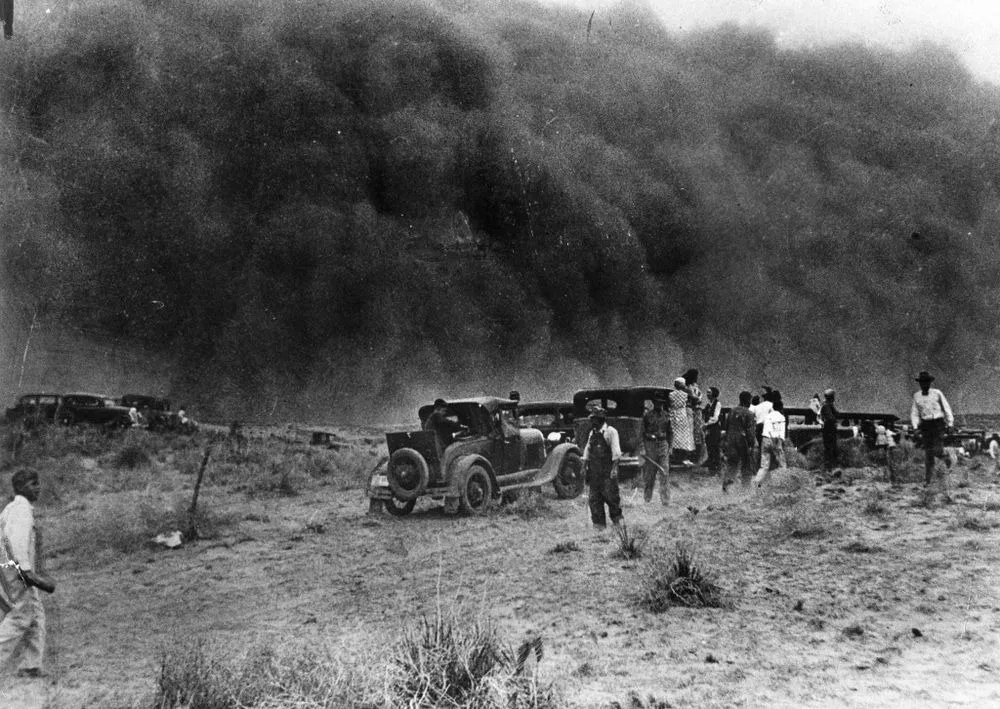 Photo: Dust Bowl, via lh3.googleusercontent.com
Agricultural economists working for the Department of Agriculture in the early 1930s spent considerable time studying existing cooperative risk-sharing arrangements, including the Virginia tobacco networks. Their internal reports acknowledged that grassroots mutual systems had demonstrated the basic viability of pooled agricultural risk. The federal program that emerged took that proof of concept and wrapped it in bureaucratic infrastructure, federal guarantees, and actuarial tables developed by government statisticians.
 Photo: Department of Agriculture, via www.nda.gov.za
What it didn't do was give the originating communities any particular stake in the new system. The cooperatives that had run these programs were gradually absorbed, redirected, or simply rendered redundant. Federal crop insurance became a government product sold through approved agents. The farmer-governed mutual model was quietly retired.
By mid-century, the story had been almost entirely rewritten. The New Deal got the credit. The tobacco farmers in rural Virginia got nothing except, eventually, the same federal program everyone else got.
What Their Design Reveals About Modern Agribusiness
Today's federal crop insurance program is enormous. The USDA's Risk Management Agency oversees policies covering hundreds of millions of acres, with premium subsidies running into the billions annually. It is, by any measure, a massive safety net.
But it is also a safety net that disproportionately benefits large commercial operations. The structure of modern crop insurance — with its complexity, its approved-agent distribution system, and its premium subsidy formulas — tilts heavily toward agribusiness scale. Small farmers, particularly those growing specialty or heirloom crops, often find the program poorly suited to their situation.
The original Virginia model had the opposite bias. It was designed by small farmers, for small farmers, calibrated to local conditions and governed by people with skin in the game.
There's a growing movement among agricultural cooperatives, particularly in organic and small-scale farming communities, to revive localized mutual risk arrangements as supplements to federal coverage. Some farmworker cooperatives in the Southeast and Midwest have quietly started doing exactly this — building informal reserve pools that mirror, almost exactly, what Virginia tobacco growers figured out a century ago.
The Vault Takeaway
The story of federal crop insurance is usually told as a government solving a problem that markets couldn't handle. That's partially true. But the fuller story is that communities solved it first — imperfectly, locally, and without recognition — and government scaled the solution while erasing the originators from the narrative.
The farmers who built those early cooperatives weren't financial innovators in any self-conscious sense. They were just people trying to survive a business that could ruin them in a single season. The system they built out of necessity turned out to be a working prototype for one of America's most important agricultural institutions.
Somebody should have mentioned that.