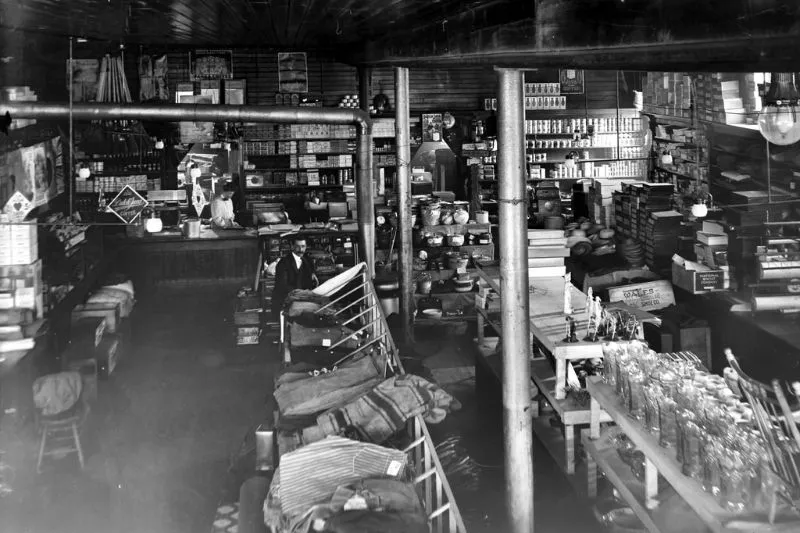
Before Venture Capital Had a Name, Harlem's Numbers Bankers Were Already Running the Playbook
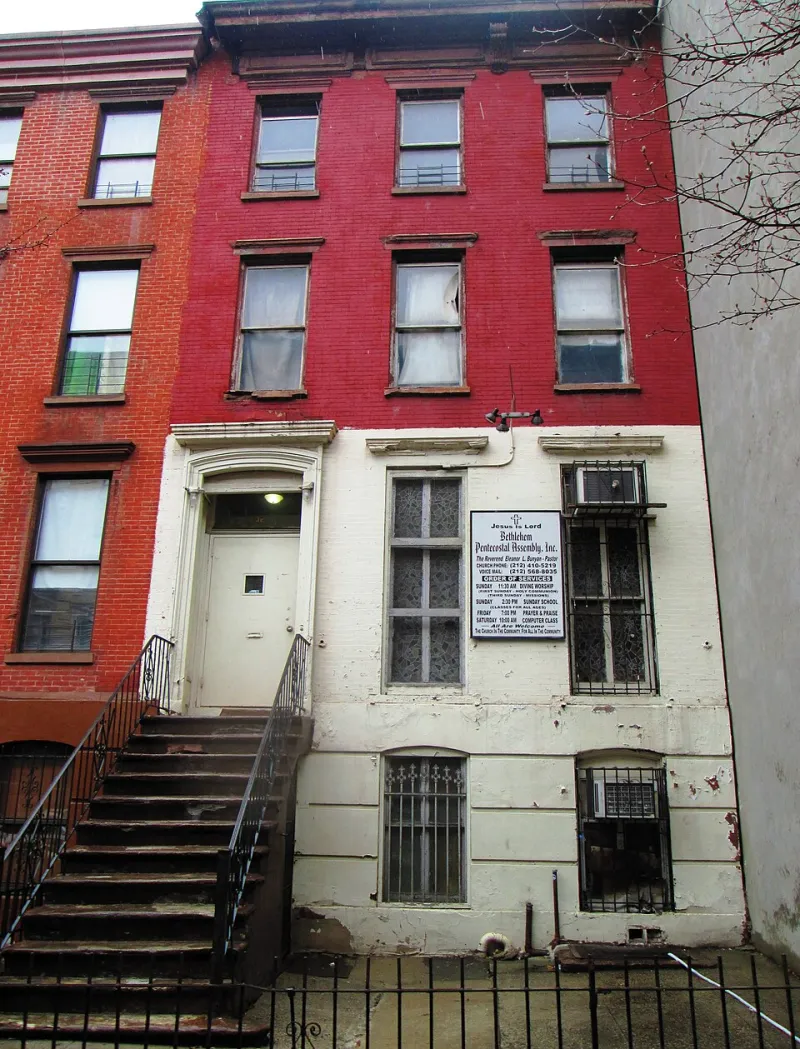
Photo: Beyond My Ken, CC BY-SA 4.0, via Wikimedia Commons
The Office That Wasn't on Any Map
If you walked through Harlem in 1928 and knew the right doors to knock on, you might have found yourself sitting across from a man named Casper Holstein — impeccably dressed, deeply calm, and in possession of more capital than most legitimate businessmen in the neighborhood could dream of. Holstein wasn't a banker in any legal sense. He was, by the standards of the law, a criminal. He ran one of Harlem's most successful numbers operations.
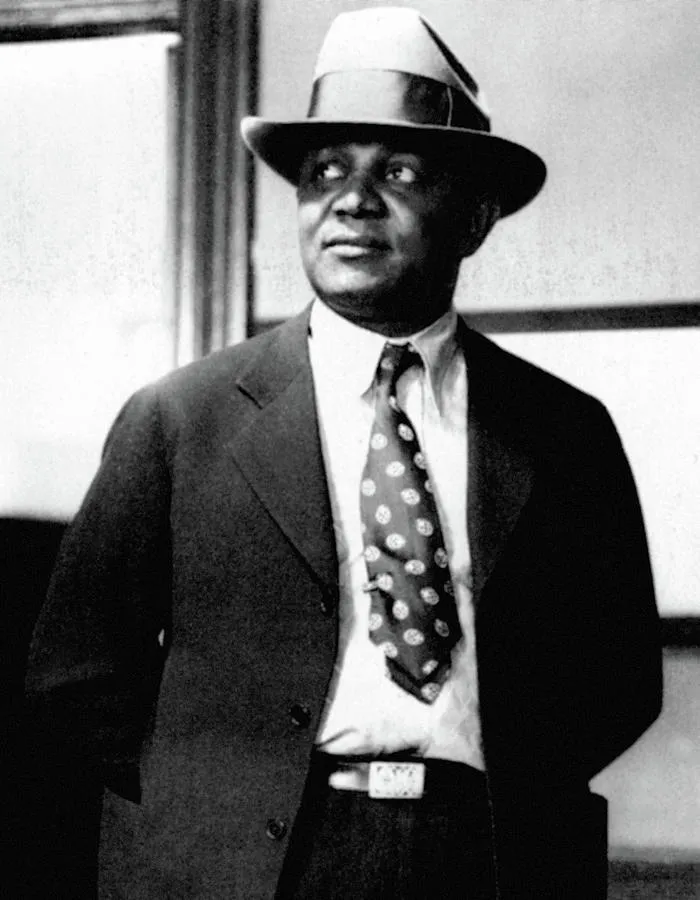 Photo: Casper Holstein, via images.fineartamerica.com
He was also, by any honest accounting, one of the most consequential investors in Black America during the interwar period. And almost nobody outside of Harlem's own historical memory knows his name.
How the Numbers Game Actually Worked
Before we get into the investment story, it helps to understand the mechanism. The numbers game — sometimes called policy or the daily number — was an underground lottery that operated throughout urban Black communities from roughly the 1920s through the mid-20th century.
The basic structure was elegant in its simplicity. Players would bet small amounts — often just a penny or a nickel — on a three-digit number. The winning combination was typically derived from some publicly available figure: racetrack payouts, treasury balance reports, stock exchange totals. Whatever it was, it couldn't be fixed by the operator, which gave the game a legitimacy that pure gambling lacked.
Runners collected bets from apartment buildings, barbershops, and street corners and funneled them to a central banker — the numbers banker — who held the pool, paid out winners, and kept the margin. The house edge was significant, typically around 40 percent, which meant that on a busy day in a dense neighborhood, a well-run numbers operation generated serious cash flow.
For most of Harlem's residents, the numbers game was simply part of the financial ecosystem. Banks wouldn't give Black families mortgages. Insurance companies charged higher rates or denied coverage outright. Formal investment products were inaccessible. The numbers game, by contrast, was everywhere, accepted everyone, and occasionally paid out life-changing sums to people who had almost no other path to a windfall.
Where the Money Actually Went
Here's the part that financial historians have largely glossed over: the most successful numbers bankers didn't just spend their profits. They reinvested them — systematically, strategically, and in ways that look remarkably familiar to anyone who's spent time studying early venture capital.
Casper Holstein, a Virgin Islands-born numbers operator who became one of Harlem's wealthiest men in the 1920s, used his profits to purchase apartment buildings throughout the neighborhood, providing housing to Black families who couldn't access conventional real estate markets. He funded literary prizes during the Harlem Renaissance, bankrolling writers and artists when no mainstream institution would. He made loans to small business owners — tailors, restaurateurs, printers — who couldn't get credit from any legitimate bank.
Holstein wasn't unique. Stephanie St. Clair, known as Madame Queen of Policy, was another major Harlem numbers operator who channeled profits into community advocacy and legal defense funds. Ellsworth "Bumpy" Johnson, perhaps the most mythologized of the Harlem numbers figures, maintained an extensive network of informal lending and community support that functioned as a shadow social safety net.
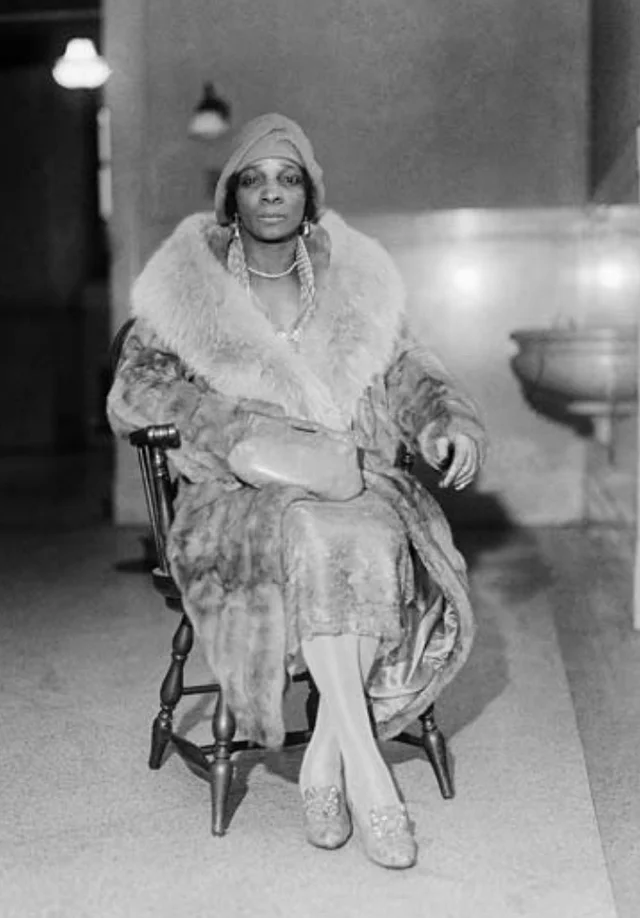 Photo: Stephanie St. Clair, via www.casino.org
What these operators were doing, stripped of the criminal context, was classic early-stage investment behavior: identifying underserved markets, providing capital to ventures that formal institutions had rejected, and accepting higher risk in exchange for returns — financial, social, and reputational — that the mainstream economy wasn't offering.
The Infrastructure Nobody Counted
The ripple effects of numbers banker investment in Harlem extended further than most people realize. Apartment buildings purchased with numbers profits housed families who would otherwise have been subject to the worst excesses of absentee landlordism. Small businesses capitalized through informal loans created employment and neighborhood anchors. The literary and cultural institutions that Holstein and others funded helped produce the creative output that made the Harlem Renaissance one of the defining cultural moments in American history.
None of this showed up in any official economic ledger. The numbers economy was, by definition, invisible to formal accounting. But it was real, and its effects were durable.
Some historians who study Black economic history — scholars like Rufus Schatzberg and more recently researchers building on the work of Roi Ottley — have begun to sketch the outlines of this shadow investment network. But it remains dramatically underrepresented in mainstream financial history, which tends to trace the venture capital lineage through New England whaling investors and postwar California semiconductor firms, with very little acknowledgment that an analogous model was operating in Manhattan decades earlier.
Why Mainstream History Looked Away
The reasons for the omission aren't hard to identify, even if they're uncomfortable to state plainly.
First, the numbers game was illegal, which made it easy to dismiss the entire ecosystem as criminal rather than economic. But illegality and economic sophistication aren't mutually exclusive — Prohibition-era bootleggers built distribution networks that some historians argue directly influenced the structure of legitimate American retail logistics. The numbers economy deserves the same analytical seriousness.
Second, the operators were Black, operating in a neighborhood that mainstream financial culture had written off. The idea that serious, replicable investment innovation was happening in Harlem in the 1920s required acknowledging that Black entrepreneurs were doing something sophisticated at a moment when American society was systematically denying their capacity for it. That was an uncomfortable acknowledgment, and history often takes the path of least discomfort.
Third, and perhaps most practically, the numbers economy was eventually absorbed and destroyed by organized crime — specifically by Italian-American mob operations that muscled into Harlem in the 1930s, often with the tacit cooperation of law enforcement. The transition was violent and disruptive, and it obscured the earlier, more community-oriented phase of the numbers economy beneath layers of gangster mythology.
The Playbook That Got Buried
What Casper Holstein and his contemporaries were running was, in functional terms, an early-stage investment network that operated under conditions of extreme institutional exclusion. No bank would lend to them. No investment firm would take their capital. No regulatory framework protected their transactions. So they built their own infrastructure, denominated in trust and enforced by reputation, and they used it to move money toward the community institutions and entrepreneurs that formal capital had abandoned.
Silicon Valley likes to tell a story about venture capital as a peculiarly Californian invention — a product of Stanford networks and defense contractor spin-offs and visionary risk-takers who saw what others couldn't. That story isn't wrong, exactly. But it's incomplete.
Some of the earliest practitioners of the model were working out of Harlem walk-ups, collecting nickels from domestic workers and reinvesting them into the neighborhood's future. They just didn't get to write the history books.
The vault, as always, contains more than what's on the label.