The GI Landlord Program Nobody Talks About: How the Government Once Handed Veterans a Real Estate Empire — Then Took It Back

Photo: Royal New Zealand Returned and Services' Association Inc, CC BY 4.0, via Wikimedia Commons
The Deal Nobody Advertised
Everyone knows about the GI Bill. The college tuition, the low-interest mortgages, the suburban dream — it's one of the most celebrated pieces of legislation in American history. What most people don't know is that alongside the famous provisions, the postwar federal government was quietly sitting on an enormous inventory of distressed, foreclosed, and surplus properties — and for a brief, remarkable window, returning veterans could access that inventory at prices that bore almost no relationship to market value.
This wasn't a headline program. It didn't have a catchy name or a mascot. It lived in the fine print of housing policy, administered through agencies like the Federal Housing Administration and, later, the Veterans Administration's property disposition programs. But for the veterans who found it, it was transformative.
How the Inventory Got There
To understand the program, you have to understand what the federal government inherited from the Depression and the war years.
The 1930s foreclosure crisis had left the FHA and its predecessor agencies holding title to thousands of residential and commercial properties across the country. The war years added to the pile — seized enemy-owned assets, surplus military housing installations, properties abandoned by families who'd relocated for defense work and never returned. By 1945, the federal government was, somewhat awkwardly, one of the largest property holders in the nation.
Keeping that inventory was expensive and politically inconvenient. Selling it off quickly and at full market value wasn't straightforward either — the postwar housing market was chaotic, construction was backlogged, and millions of veterans were coming home to a country that didn't have enough housing for them.
The solution, such as it was, involved selling portions of this inventory to veterans at significant discounts — sometimes 30 to 50 percent below appraised value — with favorable financing terms layered on top. The explicit goal was to clear the government's books while simultaneously addressing the housing shortage. The side effect was something nobody quite planned for: accidental landlords.
The Accidental Landlords
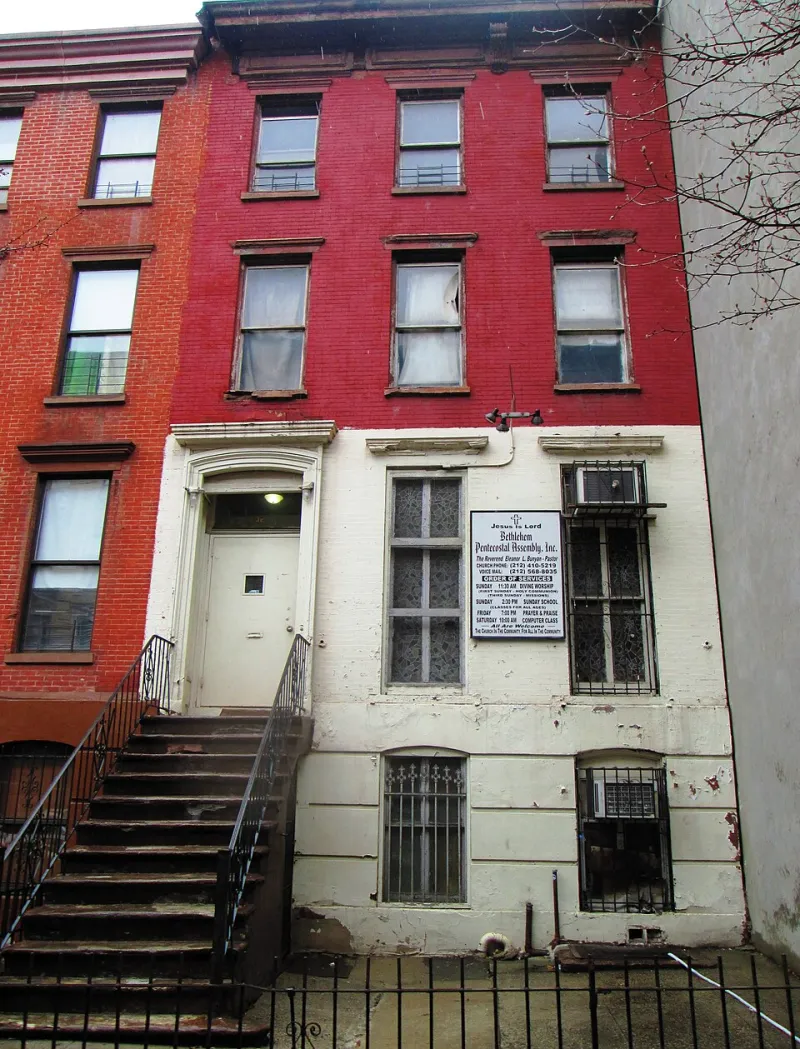
Here's where it gets interesting. Many of the properties in the federal inventory weren't single-family homes. They were small multi-unit buildings — duplexes, triplexes, the occasional four-flat — that had been foreclosed during the Depression when their original owners couldn't make the payments.
A veteran who bought one of these buildings at a steep discount, with a low-interest VA-backed loan, could live in one unit and rent out the others. The rental income often covered the mortgage entirely, sometimes with money to spare. For a generation of men who'd grown up watching their fathers lose everything in the Depression, this was an almost incomprehensible stroke of luck.
The veterans who benefited most tended to be those with the information networks to find out the program existed — often men with union connections, or those whose veterans' service organizations were actively circulating details about available inventory. In cities like Cleveland, Detroit, Baltimore, and Philadelphia, clusters of veterans quietly assembled small real estate portfolios through these channels over the late 1940s and into the 1950s.
For many of these families, the rental income from two or three discounted government properties became the financial foundation that funded their children's college educations, capitalized small businesses, and eventually passed down as inherited wealth. All from a program that never made the front page.
Why It Faded Away
By the mid-1950s, the most favorable iterations of these veteran property access programs had been significantly curtailed. The official explanation involved the depletion of inventory — the government had sold off most of what it held, and the pipeline was drying up.
But there's a less tidy explanation sitting alongside that one.
The real estate industry — particularly the National Association of Real Estate Boards, as it was then known — had grown increasingly uncomfortable with the federal government acting as a direct property seller at below-market prices. When the government sells a duplex at a 40 percent discount to a veteran, that's a transaction that doesn't go through a broker, doesn't support market-rate comps, and doesn't reinforce the pricing structures that the industry depended on.
Lobbying pressure through the early 1950s pushed toward channeling veteran housing benefits through private market transactions — meaning veterans would use their loan guarantees to buy from private sellers at market rates, with real estate agents earning commissions in the middle. This was, from the industry's perspective, a much tidier arrangement.
The shift wasn't announced. It happened gradually, through administrative decisions and budget allocations that received almost no public attention. By the time Eisenhower was in the White House, the window had effectively closed.
What a Modern Version Could Look Like
The federal government today still holds significant inventories of distressed and foreclosed properties, primarily through HUD and the FHA's real estate owned (REO) portfolio. There are existing programs — like HUD's Good Neighbor Next Door initiative — that offer discounts to certain buyers. But nothing approaches the scale or the accessibility of what existed in the late 1940s.
Housing advocates have periodically proposed reviving something like the postwar model: priority access to government-held REO properties for first-time buyers or veterans, at below-market prices, with the explicit goal of creating small-scale landlords and expanding affordable rental stock simultaneously. The math, in distressed markets, often pencils out remarkably well.
The political obstacles are familiar. The real estate industry remains sensitive to any government action that could depress comps or disintermediate brokers. And there's a general institutional reluctance to create programs that look like the government is playing favorites — even when the evidence suggests that playing favorites for veterans or first-time buyers produces durable community wealth.
The Lesson in the Ledger
The accidental landlord program is a case study in how transformative financial opportunities can exist at the margins of policy without ever becoming part of the national conversation. The veterans who found it built real, multigenerational wealth. The ones who didn't — the majority — never knew what they missed.
That asymmetry of information is, in many ways, the defining feature of American wealth-building history. The vault was open. Most people just didn't know where the door was.