The Feed Store That Ran a Futures Market — And Turned Dirt-Poor Farmers Into Shrewd Traders
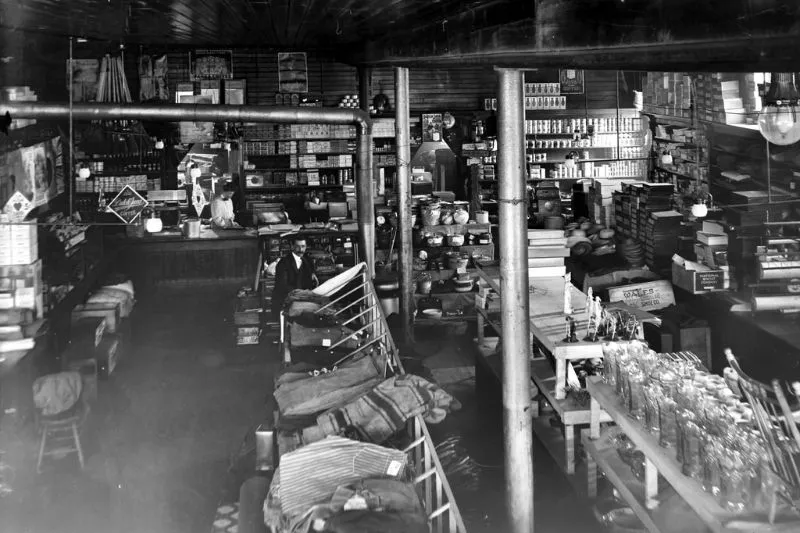
Photo: vintage Midwest general store interior early 1900s farmers, via blogger.googleusercontent.com
Picture a general store in rural Indiana, circa 1908. Sacks of flour stacked to the rafters. A potbelly stove. A proprietor who knows every farmer within thirty miles by first name. And quietly, in a worn ledger behind the counter, a running record of who agreed to sell how many bushels of corn next autumn — and at what price.
This wasn't a formal exchange. There was no ticker tape, no trading floor, no membership fee. But what was happening in hundreds of stores like this across Ohio, Indiana, Illinois, and Iowa was functionally a futures market — one that gave ordinary farmers real pricing power decades before most of them ever heard the words "commodity trading."
How the System Actually Worked
The mechanics were surprisingly elegant. A farmer who planted in spring never knew what prices would look like come harvest. Grain prices swung wildly depending on weather, rail bottlenecks, and the whims of distant speculators in Chicago. That uncertainty was brutal. It meant a farmer could work an entire season and still come up short if prices collapsed right when he needed to sell.
The general store system solved that problem the old-fashioned way: through relationships and local knowledge.
A store owner — who was simultaneously a creditor, a supply vendor, and a neighbor — would broker informal agreements between farmers and local grain buyers before the planting season even started. One farmer might agree to deliver 500 bushels of wheat at a locked-in price in October. Another might agree to split a delivery with a neighboring farm. The store owner recorded the deal, witnessed it, and sometimes put his own reputation on the line as guarantor.
This gave farmers something the formal markets wouldn't offer them for years: price certainty. They could plan. They could borrow against a known income. They could sleep at night.
The Ledger as a Financial Instrument
What made these informal exchanges stick wasn't just the price-locking. It was the social infrastructure around them.
The store ledger was a living document of community trust. Everyone knew the ledger existed. Everyone knew the store owner would remember if you welched on a deal. That social accountability — the knowledge that your neighbors, your creditors, and your seed supplier all shared the same information network — created a remarkably effective enforcement mechanism without a single lawyer or regulator involved.
Some store owners got genuinely sophisticated about it. There are documented cases in Illinois and Ohio from the early 1900s where general store proprietors essentially ran seasonal price auctions, gathering farmers and buyers together in the fall to negotiate collective prices rather than letting each farmer fend for himself. The group had leverage. An individual farmer trying to sell 300 bushels to a grain elevator had almost none.
The result? In communities where these networks were strongest, farmers consistently captured better prices than their counterparts in towns dominated by railroad-connected grain brokers.
When the Professionals Showed Up
The system started unraveling around the 1910s and 1920s, and the cause was frustratingly predictable. As rail networks expanded and large grain speculators extended their reach into rural markets, the informal exchange model faced competition it couldn't match on volume or speed.
Larger grain elevator companies, backed by railroad money, began offering farmers direct contracts — but on the elevator's terms. The store owner's ledger couldn't compete with a printed contract from a company with a Chicago office. Slowly, the informal futures market got absorbed into the formal one. The farmers who had once traded peer-to-peer now fed their grain into a system they had no influence over.
The store owners who had run these networks didn't disappear overnight, but their financial role did. By the 1930s, they were back to just selling flour and seed.
What Got Lost in the Handoff
Here's the part that should bother us a little. The informal system had a feature the formal markets never replicated: it was local, transparent, and genuinely bilateral. Both sides of the deal knew each other. Both sides had reputation on the line. The information asymmetry that plagues modern commodity markets — where a hedge fund in Connecticut can move grain prices for a Kansas farmer who has no idea why — simply didn't exist.
Farmers weren't just price-takers. They were participants.
That distinction matters more today than it might seem. The rise of peer-to-peer trading platforms, direct-to-consumer agricultural marketplaces, and even blockchain-based commodity contracts are all, in a sense, trying to rebuild what those store ledgers once did: connect producers and buyers with fewer intermediaries and more transparency.
Some farmers' cooperatives have gotten close. Community-supported agriculture programs, where consumers buy shares of a farm's output before the season starts, are essentially the same handshake deal the Indiana store owner was brokering in 1908 — just with a website instead of a ledger.
The Vault Takeaway
Finance has a habit of convincing us that complexity equals sophistication. That real markets require formal institutions, licensed intermediaries, and algorithmic pricing. But those rural store ledgers tell a different story.
For a few decades in early 20th-century America, a network of general store owners gave ordinary farmers something the Chicago Board of Trade never quite managed: genuine pricing power rooted in community trust.
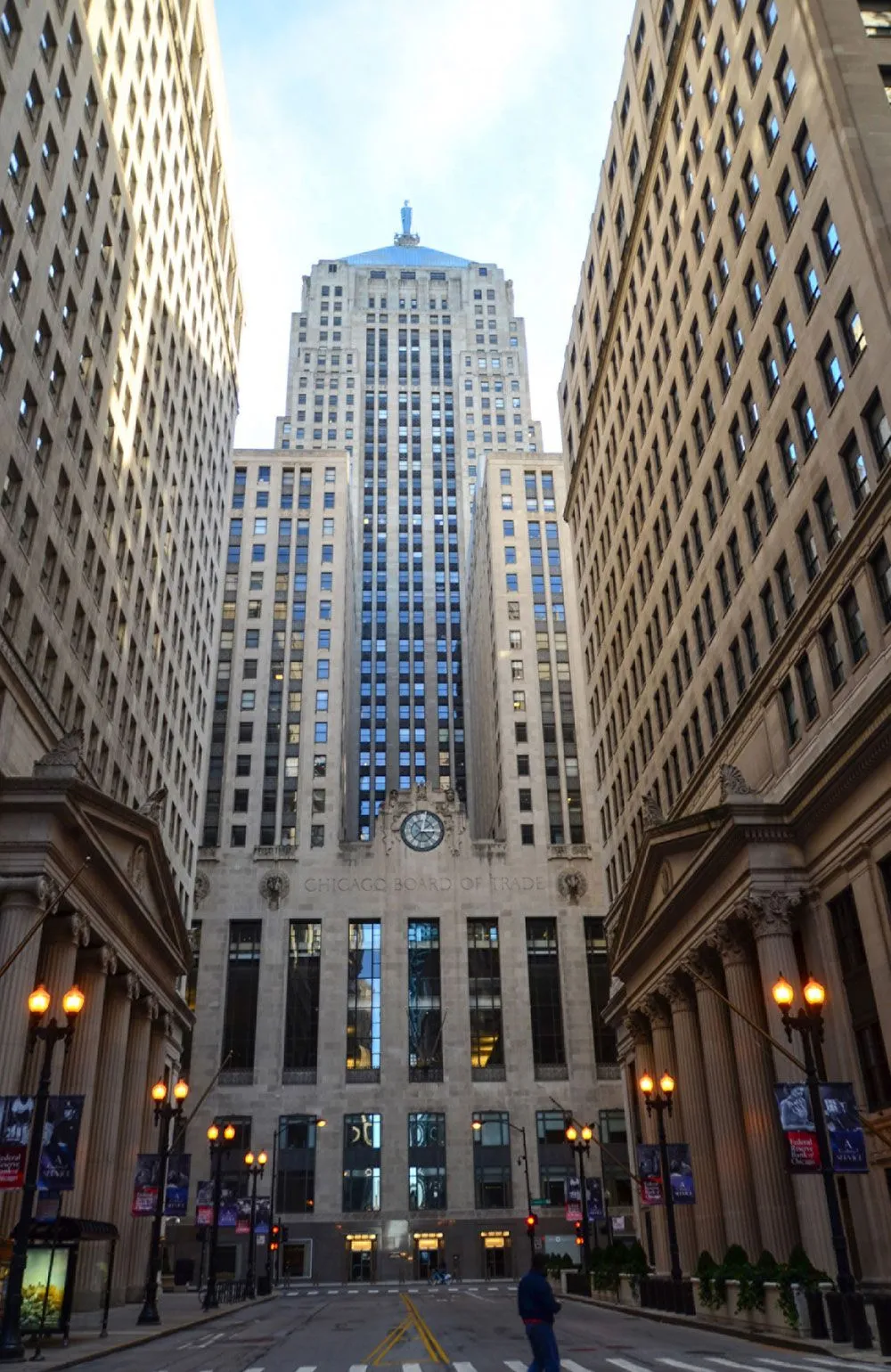 Photo: Chicago Board of Trade, via cdn.britannica.com
When the professionals muscled in and called it progress, they weren't entirely wrong. The formal markets were more efficient in some ways. But efficiency and fairness aren't the same thing — and the farmers who lost their informal exchange probably felt that difference in their bank accounts for the rest of their lives.