Track Layers and Pension Pools: The Railroad Workers Who Built Retirement Savings Before Washington Invented the Rules
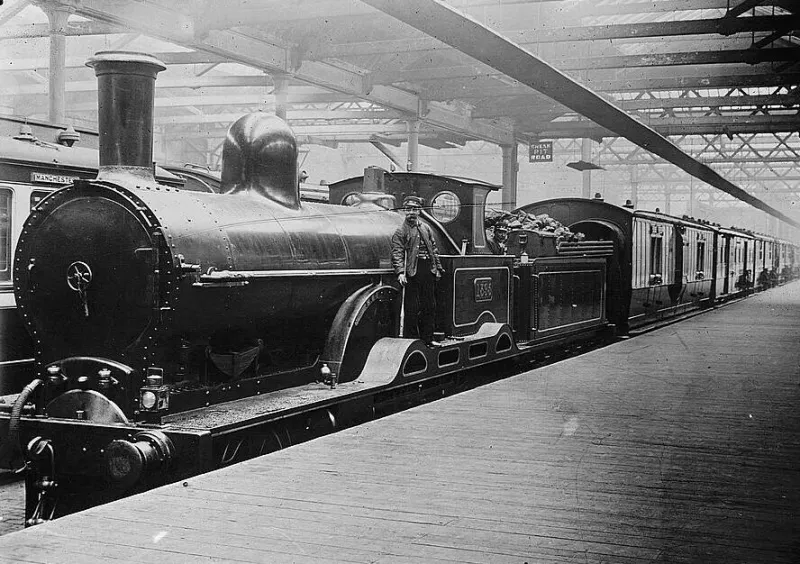
Photo: The Library of Congress, No restrictions, via Wikimedia Commons
Everybody knows the 401(k) story. Congress slips a small provision into the Revenue Act of 1978, a benefits consultant named Ted Benna figures out how to exploit it in 1980, and suddenly America has a retirement savings revolution. Clean, tidy, Wall Street-approved.
Except that's not really where the idea started.
Decades before any of that happened — before tax code sections were weaponized into financial products — railroad workers were already running something that looked remarkably similar. And they built it themselves, at the bargaining table, in the 1890s.
The Problem That Built the Idea
By the 1880s, railroads were America's dominant industry and its most dangerous employer. Track layers, brakemen, and switchmen faced injury rates that would make a modern OSHA inspector faint. When a worker got hurt or aged out of the job, there was no safety net. You either had family to fall back on or you had nothing.
Railroad companies knew this was a problem — not out of compassion, but because high turnover and labor unrest were expensive. A few large lines, including the Baltimore & Ohio, started experimenting with relief funds in the 1880s. Workers contributed small amounts from each paycheck. The company kicked in a matching contribution. Sound familiar?
These early pools were crude, but the architecture was unmistakable. Deferred compensation, employer matching, and a payout tied to years of service. The Brotherhood of Locomotive Engineers and other emerging rail unions took notice — and then took it further.
 Photo: Brotherhood of Locomotive Engineers, via i.etsystatic.com
What the Unions Actually Built
Through a series of contract negotiations in the 1890s and early 1900s, several major rail unions negotiated formal deferred compensation schemes that went well beyond the company relief funds. Workers could elect to have a portion of wages held back — not just as savings, but as a negotiated future obligation from the employer, often with guaranteed interest rates attached.
The Brotherhood of Railroad Trainmen, one of the most powerful unions of the era, pushed arrangements where employers were contractually required to match contributions at rates that, in some agreements, exceeded what most modern 401(k) plans offer today. Some contracts included provisions for the funds to be invested in railroad bonds — meaning workers were literally co-financing the infrastructure they built with their own deferred wages.
 Photo: Brotherhood of Railroad Trainmen, via i.etsystatic.com
It wasn't called a pension plan. It wasn't called a retirement account. The terminology didn't exist yet. But functionally? It was both.
The Part That Got Lost in Translation
Here's where the story gets interesting — and a little frustrating.
When the federal government eventually formalized pension protections through the Employee Retirement Income Security Act of 1974, and when the 401(k) emerged shortly after, the framework that got enshrined into law was a significantly watered-down version of what railroad workers had already negotiated for themselves.
The original railroad schemes had two features that modern 401(k) plans quietly dropped. First, the employer's matching obligation was guaranteed — it wasn't optional or subject to annual corporate discretion the way most 401(k) matches are today. Second, the worker retained a claim on the deferred wages even if they left the employer, a concept called immediate vesting that took decades of additional labor law battles to partially restore.
When Wall Street repackaged the concept for the post-ERISA era, they kept the tax-advantaged wrapper and jettisoned the worker protections. The result is the system most Americans live with now: employer matches that can vanish in a bad quarter, vesting schedules that punish workers who change jobs, and contribution limits that benefit high earners far more than the hourly workers who inspired the idea in the first place.
Why It Matters Now
This isn't just a history lesson. The gap between what railroad workers originally negotiated and what the 401(k) eventually became explains a lot about why retirement security in America feels so fragile for so many people.
About half of American workers have no access to any employer-sponsored retirement plan at all, according to recent AARP data. Of those who do, a significant chunk work for employers who offer minimal or no matching contributions. The architecture is there — the tax advantage, the payroll deduction mechanism, the basic concept of deferred compensation — but the worker protections that made the original railroad version genuinely powerful were never baked in.
Some policy researchers and labor advocates have pointed back to the pre-New Deal railroad model when arguing for automatic enrollment mandates, guaranteed minimum employer contributions, and portable retirement accounts that follow workers between jobs. These aren't radical new ideas. They're old ones that got edited out somewhere between the bargaining table and the tax code.
The Vault Takeaway
The next time someone tells you the 401(k) was a visionary innovation cooked up by clever financial minds, remember the guys tightening rail spikes in 1897 who had already figured out the essential math. They just didn't have lobbyists to name it after them.
The real lesson buried in this history isn't cynical — it's actually kind of useful. The most durable financial tools tend to emerge from people solving real, immediate problems with limited resources. The railroad workers weren't theorizing about retirement optimization. They were trying to make sure they didn't die broke after a lifetime of dangerous work.
Sometimes the best financial ideas don't start in glass towers. They start in the mud.