The Layaway Hustle Nobody Documented: How Ordinary Shoppers Used Department Store Credit to Launch Small Businesses

Photo: Unknown, Public domain, via Wikimedia Commons
Layaway doesn't get a lot of respect in the financial world. It's usually described as a poor person's credit card — a way to slowly pay for something you can't afford yet, without the debt. Practical, maybe. Sophisticated, definitely not.
But somewhere in the mid-20th century, a scattered group of American shoppers figured out that the layaway counter at their local department store could do something much more interesting than hold a Christmas coat until December. With the right approach, it could function as a revolving credit line — one that didn't require a credit check, didn't report to any bureau, and could quietly float the early expenses of a small business venture.
Nobody officially documented this. It doesn't appear in business school curricula or financial history books. But it shows up — repeatedly, in recognizable patterns — in oral histories, local newspaper archives, and the stories that small business owners from the 1940s through the 1970s told about how they got started.
How Layaway Actually Worked in the Department Store Era
To appreciate the trick, you need to understand how layaway operated at its peak. Major department stores — Sears, Montgomery Ward, local chains across the country — ran layaway programs as a core part of their business model from roughly the 1930s through the 1980s.
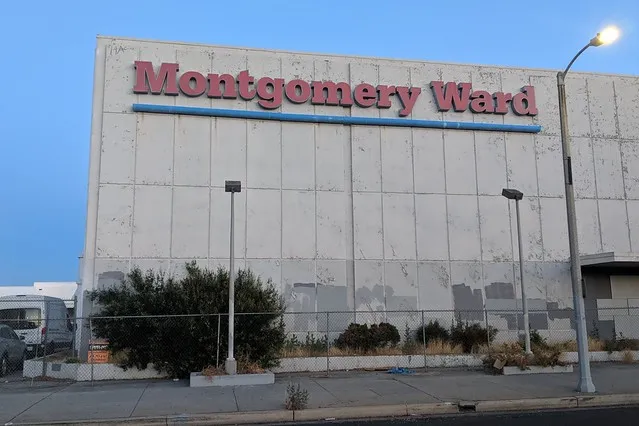 Photo: Montgomery Ward, via live.staticflickr.com
The basic mechanics: a customer selects merchandise, puts down a deposit (often 10 to 20 percent), and makes regular payments until the item is paid off, at which point they take it home. Simple enough. But the larger stores, particularly those competing hard for working-class customers in the postwar boom years, added features to make the programs stickier.
Some stores allowed customers to add items to an existing layaway account without starting a new one. Others allowed partial withdrawals — taking one paid-off item while leaving others in the account. And critically, many stores offered what amounted to in-store credit for regular layaway customers: the ability to charge purchases against a store account with a payment schedule attached, based on the customer's history with the layaway program.
That in-store credit, for a customer who had carefully cultivated a relationship with the store's credit department, could be substantial — sometimes equivalent to several months of a working-class income.
The Reverse Layaway
Here's where it gets clever. A number of shoppers discovered that you could run layaway in reverse.
Instead of using layaway to acquire goods you couldn't yet afford, you could use it to park cash in a form that the store's credit department would recognize as a strong payment history. Make consistent, slightly larger-than-required payments on layaway accounts. Build a track record. Then, when you needed access to a lump sum — for a piece of equipment, a first month's rent on a small storefront, a bulk purchase of inventory — you'd leverage that history to access the store's credit line, draw on it quickly, and pay it back through the same disciplined payment pattern.
In some cases, as described in oral histories collected by community business associations in cities like Chicago, Detroit, and Baltimore, shoppers would maintain multiple layaway accounts simultaneously across different departments, building what amounted to a diversified credit profile within a single store. The store saw a reliable, high-volume customer. The customer saw a credit facility.
Who Was Actually Doing This
The people who used this approach most creatively tended to be working-class women — and this matters, because it reflects the financial reality of the era. Women in mid-century America were frequently denied access to business credit in their own names. A married woman often couldn't open a business bank account without her husband's signature. A single woman trying to start a small venture faced even higher barriers.
But layaway accounts? Those were considered domestic, household purchases. Women managed them. Women were the primary customers. And so women were the ones who learned the system most deeply — and found its edges.
Oral histories from Black communities in particular describe this practice with some frequency. In neighborhoods where banks were either physically absent or operationally hostile to Black customers, the department store credit relationship was sometimes the most accessible formal credit instrument available. Several women interviewed in community history projects described using Sears or local department store accounts as the financial foundation for early ventures — beauty shops, alterations businesses, small catering operations.
The Limits and the Legacy
This wasn't a perfect system. Store credit lines had limits, and those limits were set by store managers who had their own biases and blind spots. The strategy worked best for people who were already reliable earners — it amplified what you had, but it couldn't manufacture resources from nothing.
And it disappeared fairly quietly. As bank credit cards proliferated through the 1970s and 1980s, department stores shifted away from in-house credit programs. Layaway became simpler and more transactional. The cultivated, relationship-based credit dynamic that made the trick work faded out.
Modern layaway programs — and the buy now, pay later apps that have largely replaced them — don't offer the same flexibility. They're optimized for the retailer, not the customer.
The Bigger Point
What this story really illustrates is how financial creativity flourishes exactly where formal systems fail. When the bank won't talk to you and the SBA loan is a fantasy, you look at what's actually available and you think differently about what it can do.
The department store layaway hustle wasn't taught anywhere. It spread through word of mouth, neighbor to neighbor, between people who understood that the rules of the financial system were written for someone else — and that sometimes the best move was to find a door the rule-writers forgot to lock.
That instinct — find the available tool, use it sideways, build something real — is probably the most underrated entrepreneurial skill in American history. It just rarely gets a case study.