The Quiet Tax Rule That Helped Some Southern Families Keep Their Land — When Everything Else Was Designed to Take It
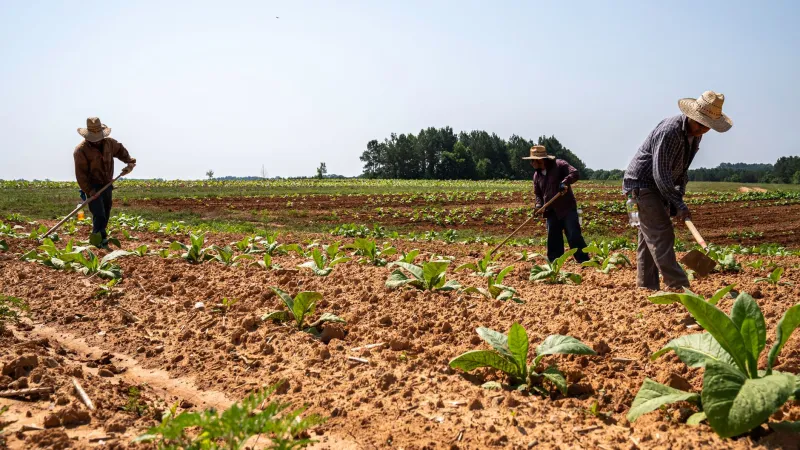
The financial history of Black families in the rural South during the mid-20th century is mostly a story of extraction. Sharecropping arrangements that reset to zero every harvest season. Credit systems controlled by the same landowners who set the crop prices. Banks that simply wouldn't lend. Federal agricultural programs that distributed benefits through local white officials who had every incentive to keep those benefits away from Black farmers.
But inside that landscape of systemic exclusion, there were occasional cracks — small legal provisions that, if you knew they existed and knew how to use them, could move resources in the other direction. One of the most consequential and least remembered was a mid-century agricultural tax provision that a handful of tenant farming communities quietly exploited to do something remarkable: build property ownership across generations.
How Sharecropping Actually Worked (Financially)
To understand why this provision mattered, you have to understand the financial mechanics of sharecropping at its most exploitative.
A tenant farmer — let's say a Black family in rural Mississippi or Alabama in the 1940s — would farm a portion of a landowner's property in exchange for a share of the crop. Simple enough on paper. In practice, the family typically had to purchase seeds, tools, and food on credit from the landowner's store at prices the landowner set. At harvest, the landowner calculated the crop share, subtracted the credit balance, and often found that the family owed more than they'd earned. The debt rolled into the next year. And the next.
It was a cycle engineered to prevent accumulation. You couldn't save what you never received.
The Provision Nobody Was Talking About
In the 1940s and into the 1950s, the federal tax code contained provisions related to agricultural income that treated certain categories of farm-related expenses and improvements differently from ordinary income. Specifically, rules around the treatment of soil and water conservation expenditures — costs incurred for improving the productivity of farmland — allowed for deductions and, in some cases, favorable treatment of what might otherwise be counted as taxable income or gain.
For most landowners, this was a useful but unremarkable tool for managing farm business taxes. But some tenant farmers, particularly those who had negotiated lease arrangements that gave them partial improvement rights, discovered that expenditures they made on the land — clearing, draining, building small structures — could be treated in ways that created a paper record of their investment in that property.
A small number of communities, often guided by Black agricultural extension agents, local NAACP chapters with legally savvy members, or individual lawyers who understood both tax law and the local landscape, began using this documentation strategically. The recorded improvements became leverage — in some cases forming the basis of adverse possession claims, in others supporting negotiations for formal land purchase agreements that lenders couldn't easily dismiss because the paper trail was sitting right there in the tax records.
What Communities Actually Did With It
Oral histories collected by researchers at historically Black universities in the South, along with scattered local newspaper archives from the 1950s and 1960s, describe a pattern that appears in multiple communities across Georgia, Mississippi, and Arkansas.
Families would make deliberate, documented improvements to leased land — often small in dollar terms but significant in the record they created. They'd work with anyone who had accounting or legal knowledge to ensure those improvements were properly recorded with the county and reflected in tax filings. Over time, some of these families leveraged that documented history to negotiate purchase agreements directly with landowners who, for various reasons, were willing to sell rather than fight a legal process.
The land that changed hands this way was rarely large. We're talking about small farms — 20, 40, maybe 80 acres. But in communities where land ownership was the difference between generational stability and generational poverty, those acres mattered enormously. Families who owned land had collateral. They could borrow — sometimes from Black-owned banks and credit unions that were specifically looking for borrowers with documented assets. They could pass something to their children.
Why the Window Closed
By the early 1960s, several of the specific provisions that made this strategy work had been revised or eliminated in broader agricultural tax reform efforts. The changes weren't targeted at tenant farmers — they were part of larger cleanup efforts in the tax code. But the effect was to close a door that had never been widely opened in the first place.
Almost nobody wrote about it when it happened. There was no constituency lobbying to preserve a tax tool that primarily benefited poor Black farmers. The families who had used it successfully were not exactly advertising their methods, for obvious reasons. And so it simply disappeared from the record.
What This Story Actually Teaches
The conventional narrative about wealth-building for Black families in the Jim Crow South focuses — rightly — on the enormous structural barriers. Those barriers were real and devastating and their effects echo into the present.
But the story of this tax provision is a reminder that even inside deeply hostile systems, people found legal leverage points and used them with remarkable creativity. They didn't wait for the system to become fair. They found the places where it was momentarily, accidentally, or carelessly useful — and they moved fast.
That's not a lesson about tax loopholes. It's a lesson about financial literacy as survival. The families who benefited from this provision weren't wealthy or well-connected. They were people who understood their situation precisely enough to recognize an opportunity that most people around them couldn't see.
The land some of those families still hold today started with someone reading a tax rule very carefully.