Before the Trading App, There Was the Tobacco Floor: How Warehouse Auctions Turned Farmers Into Speculators
Before the Trading App, There Was the Tobacco Floor: How Warehouse Auction Houses Turned Farmers Into Speculators
The story of how ordinary Americans learned to trade usually starts somewhere around 1999 — the dot-com bubble, discount brokerages, the first wave of retail investors clicking buy on stocks they barely understood. But that story has a much older, stranger prequel. And it smells like cured tobacco.
In the bright-leaf tobacco country of North Carolina and the burley belts of Kentucky, for roughly a century spanning the mid-1800s through the mid-1900s, tobacco auction warehouses functioned as something that nobody had officially designed them to be: a speculative trading floor accessible to anyone who could walk through the door and had something to put on the pile.
No brokerage account required. No regulatory approval. No minimum investment. Just a warehouse full of leaf, an auctioneer moving at an incomprehensible speed, and a room full of people — some of them farmers, some of them merchants, some of them pure speculators — making split-second financial decisions that would determine whether they'd have a good year or a ruinous one.
How the Auction Floor Actually Worked
To understand what was happening financially, you need to picture the physical scene.
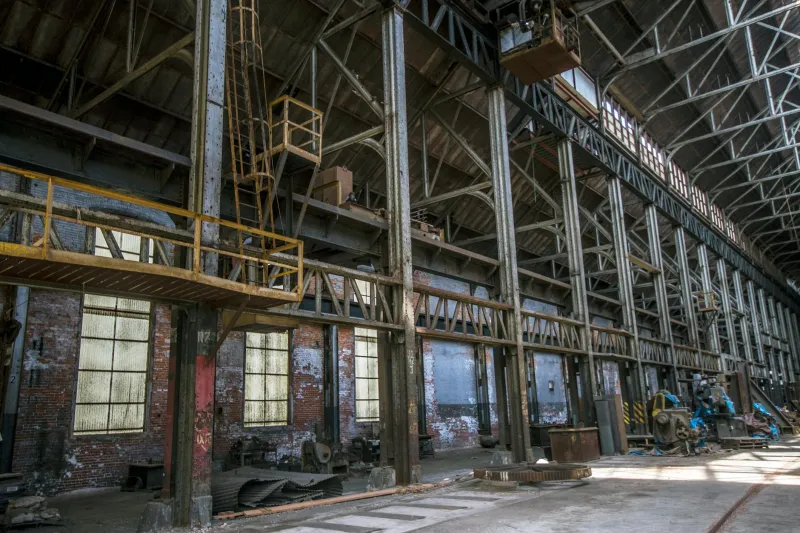
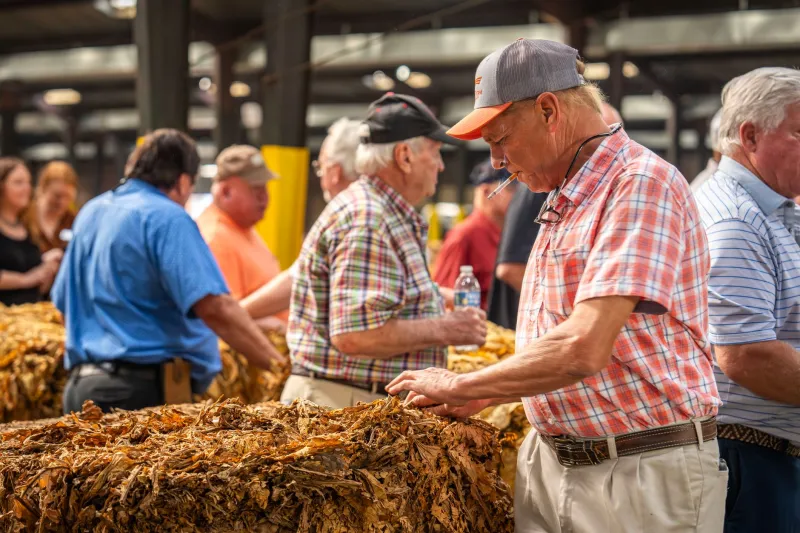
A tobacco auction warehouse in, say, Wilson, North Carolina in 1910 was a cavernous building — often hundreds of feet long — with cured tobacco laid out in rows on the floor in flat baskets called hands. Growers brought their crop, it got tagged and arranged, and then the auction parade began.
The auctioneer and a line of buyers from the major tobacco companies moved rapidly down the rows. The auctioneer sang prices in a chant that trained ears could decode but newcomers found impenetrable. Buyers signaled with fingers, nods, or subtle gestures. A basket of tobacco worth weeks of a farmer's labor sold in under ten seconds.
What most historical accounts skip over is what happened around the auction — in the margins of the warehouse, in the back rooms, on the loading docks before and after the official sale.
The Speculation Nobody Regulated
Here's where it gets interesting. Tobacco prices were notoriously volatile. A crop that fetched twenty cents a pound one week might drop to fourteen the next, depending on company buying patterns, weather news from competing regions, or rumors about overseas demand. That volatility created an obvious opportunity for anyone who could read the market.
And people did. Warehouse operators, local merchants, and eventually a class of people who could only be called tobacco speculators began operating in the gaps the official auction system left open.
A farmer who thought prices were about to rise might hold his crop off the floor for a week or two, storing it in the warehouse and paying modest fees while he waited. A merchant with capital might buy tobacco at auction not to manufacture anything, but purely to resell it when the price moved in his favor. Warehouse operators themselves sometimes accumulated inventory positions that looked a lot like the commodity speculation happening simultaneously on the formal Chicago exchanges — just without the paperwork.
Smaller participants got in too. A farmer who'd already sold his crop but had cash available might offer to buy a neighbor's unsold stock at a discount, betting he could move it at auction when conditions improved. These informal futures arrangements — buy now, sell later, pocket the spread — were happening on handshake terms across the tobacco belt in a way that would have been immediately recognizable to any Wall Street trader.
Learning the Market Without a Teacher
What's remarkable in retrospect is how quickly ordinary participants developed real market sophistication.
Farmers who attended auction regularly — which meant most farmers in tobacco country, since this was their single most important annual financial event — absorbed pricing patterns, seasonal rhythms, and buyer behavior through sheer repetition. They learned which weeks the big companies bought aggressively and which weeks they pulled back. They learned how weather in one region rippled into prices in another. They developed intuitions about when to sell and when to hold that amounted to genuine market timing skill.
Oral histories collected from tobacco farming communities in the Carolinas and Kentucky describe farmers who became known throughout their counties for their auction acumen — men and women who seemed to always get better prices than their neighbors, not because their crop was superior, but because they understood the rhythm of the floor.
Some of these people began advising neighbors on timing, charging informal fees or taking a small cut of the price improvement they delivered. In a different era, they'd have been called financial advisors. In tobacco country in 1920, they were just the neighbor who knew things.
The Leverage Hidden in the Storage System
One of the most overlooked aspects of the tobacco warehouse economy was how it accidentally created leverage for small operators.
Warehouse storage arrangements allowed farmers and speculators to hold tobacco inventory while paying only storage fees — a fraction of the crop's value. If you held a thousand dollars worth of tobacco and prices rose fifteen percent, you captured a hundred and fifty dollars in gain while having paid perhaps twenty dollars in storage. That's a return structure that any options trader would recognize immediately.
Of course, it worked in reverse too. Prices could fall while storage fees accumulated, squeezing a speculator who'd misjudged the market. The warehouse floors produced both the region's savviest informal investors and some of its most spectacular small-scale financial disasters, often involving the same people in alternating years.
There was no margin call mechanism, no formal risk disclosure, no regulatory body watching over the whole thing. Just market forces, local reputation, and the hard education of getting it wrong.
Why Wall Street Never Noticed
The tobacco warehouse trading ecosystem never attracted much attention from financial historians, partly because it left few formal records and partly because it didn't look like finance from the outside. It looked like agriculture.
But the functional reality was that millions of Americans in tobacco country spent generations developing market instincts, speculative skills, and capital allocation judgment on the warehouse floor — long before the concept of retail investing existed, long before financial literacy became a policy concern, and without a single regulatory framework to guide or constrain them.
When electronic trading platforms eventually arrived and suddenly made speculation accessible to anyone with a smartphone, the financial press acted as though retail speculation was a new and alarming phenomenon. In tobacco country, it was a tradition that went back before the Civil War.
The warehouse floor didn't have an app. But it had everything else.