How Blue-Collar Workers Invented Automatic Investing — Then Wall Street Took All the Credit

The Original Paycheck Hackers
Long before behavioral economists discovered the power of "choice architecture" and fintech companies automated your savings, a group of soot-covered railroad workers in post-Civil War America had already cracked the code on effortless wealth building. Their secret wasn't sophisticated investment strategies or cutting-edge technology — it was never seeing part of their paycheck in the first place.
What these industrial workers invented in the 1880s would eventually become the foundation of modern automatic investing, 401(k) plans, and every "pay yourself first" app on your phone. But their story has been almost entirely forgotten, buried under a century of financial industry marketing that presents these ideas as recent innovations.
The Problem That Forced Innovation
Railroad work in the late 1800s was brutal, dangerous, and unpredictably paid. Workers might go weeks without wages, then receive a large lump sum when the company had cash flow. This feast-or-famine cycle made budgeting nearly impossible and left families vulnerable to both emergencies and their own impulse spending.
But railroad workers had something most Americans didn't: strong labor unions with real negotiating power. And these unions understood a fundamental truth about human psychology that wouldn't be formally documented by researchers for another century: the hardest part of saving money isn't earning it — it's not spending it once you have it.
Their solution was elegantly simple: convince employers to split paychecks automatically, sending predetermined amounts to different destinations before workers ever saw the full sum.
The System That Built Generational Wealth
Here's how it worked: When railroad companies issued paychecks, a portion would go directly to company-sponsored savings programs, pension funds, or even local banks that had agreements with the unions. Workers would negotiate these "wage assignments" as part of their employment contracts, essentially forcing their future selves to save.
The Pennsylvania Railroad, one of the largest employers in America, developed an elaborate system where workers could automatically direct portions of their wages toward company stock, bonds, or savings accounts. The Baltimore & Ohio Railroad offered similar programs, with the added benefit of employer matching contributions — a concept that wouldn't become widespread until the 401(k) era.
 Photo: Pennsylvania Railroad, via dierksphoto.com
Steelworkers soon adopted similar strategies. Andrew Carnegie's steel mills offered automatic payroll deductions for company stock purchases, allowing blue-collar workers to become shareholders in the businesses they helped build. Some estimates suggest that by 1900, automatic wage splitting had helped create more working-class millionaires than any other wealth-building strategy in American history.
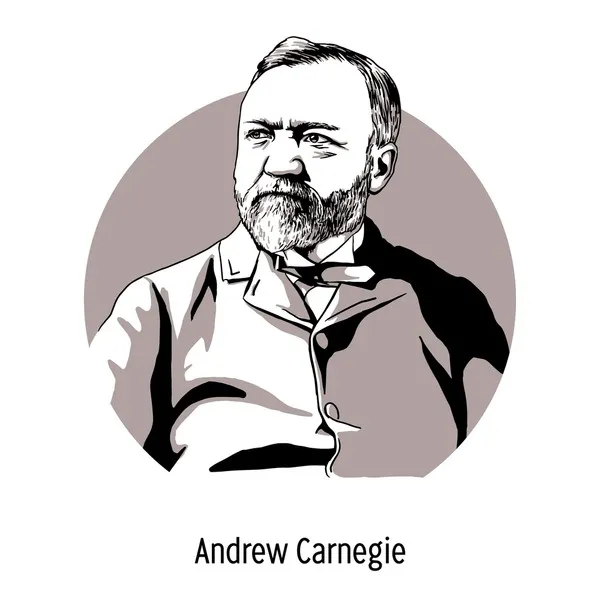 Photo: Andrew Carnegie, via www.shutterstock.com
The Psychology Behind the Success
What made these programs so effective wasn't just the forced savings — it was how they worked with human nature instead of against it. Workers never had to make daily decisions about whether to save or spend. The choice was made once, during contract negotiations, and then automated away.
This eliminated what behavioral economists now call "decision fatigue" and "present bias" — the tendency to prioritize immediate rewards over long-term benefits. When part of your paycheck disappeared before you could spend it, saving became effortless rather than a constant exercise in willpower.
The social aspect was equally important. Because wage splitting was negotiated collectively, it became a community norm rather than an individual discipline problem. Workers who might have felt embarrassed about their spending habits could participate in wealth building without admitting they needed help with financial self-control.
Why the Innovation Vanished
Despite its success, automatic wage splitting began declining in the early 1900s. Several factors contributed to its disappearance, many of which echo debates happening in today's gig economy.
First, as labor unions weakened, workers lost the collective bargaining power needed to negotiate these programs. Individual employees rarely had enough leverage to convince employers to complicate payroll for their benefit.
Second, the rise of consumer credit made saving seem less urgent. Why automatically save for a future purchase when you could buy it immediately with credit and pay over time? This shift in mindset fundamentally changed how Americans thought about money management.
Finally, the financial services industry discovered they could make more money by managing individual accounts than by facilitating employer-based automatic savings. Banks and investment companies began marketing personal financial products that put them, rather than employers or unions, at the center of the wealth-building process.
The Corporate Repackaging
By the 1970s, when companies like Fidelity and Vanguard were developing 401(k) programs, the railroad workers' innovations had been largely forgotten. Financial services companies presented automatic payroll deductions as cutting-edge behavioral finance, supported by new research into human psychology and decision-making.
The irony is that modern 401(k) plans are actually less generous than their blue-collar predecessors. While railroad and steel companies often matched worker contributions dollar-for-dollar, today's typical employer match is 50 cents on the dollar, and only up to a certain percentage of salary.
Modern automatic investing apps like Acorns and Digit use similar psychological principles, but they're marketed as revolutionary fintech innovations rather than digital versions of 19th-century labor organizing.
What We Lost in Translation
The most important difference between then and now isn't technological — it's social. Railroad workers' wage splitting programs were collective solutions negotiated by groups with shared interests. Today's automatic investing is an individual product sold to isolated consumers.
This shift matters because collective programs created social pressure to participate and continue saving, while individual programs rely entirely on personal motivation. It's much easier to opt out of your personal Acorns account than it would have been to break a union-negotiated wage assignment that your coworkers were counting on.
The Lessons for Modern Workers
The railroad workers' forgotten innovation offers insights that go beyond automatic investing. They understood that sustainable wealth building requires systems that work with human psychology, not against it. They recognized that individual willpower is unreliable, but collective action and automated systems can overcome individual weaknesses.
Most importantly, they proved that you don't need sophisticated financial knowledge to build wealth — you just need to never see the money you're supposed to save.
The next time a fintech company advertises "revolutionary" automatic investing technology, remember the soot-covered railroad workers who figured it out 140 years ago. They didn't have apps or algorithms, but they understood something that modern financial marketing often obscures: the best investment strategy is the one that happens without thinking about it.