The Crowd That Outbid the Bank: How Depression-Era Neighbors Saved Each Other's Farms for a Penny
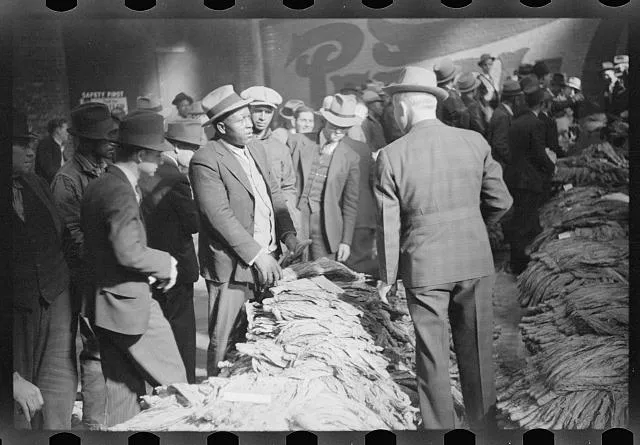
Photo: Marion Post Wolcott, Public domain, via Wikimedia Commons
Imagine losing your farm to a bank after a bad harvest, watching strangers arrive to auction off everything your family built — and then watching your neighbors show up, bid a single penny, and hand it all back to you.
That actually happened. Repeatedly. And for a brief, remarkable window in American history, it worked.
What a Penny Auction Actually Was
The term sounds almost whimsical now, but penny auctions — sometimes called "Sears auctions" or "Farmers' Sales" depending on where you lived — were a form of organized, community-driven resistance to bank foreclosures. The mechanics were simple and brilliant.
When a bank seized a farm or home and scheduled a public auction, neighbors would gather in force. Any outsider who showed up to bid competitively was met with a quiet but unmistakable warning: don't. The crowd would then bid in absurdly low increments — a penny for a tractor, a nickel for a barn, a dollar for the whole property. With no outside competition willing to risk the social consequences, the bank's asset sold for almost nothing. The neighbors then handed everything back to the original owner.
Legally, the auction had concluded. The bank had technically received payment. And a family kept their home.
The Geography of Resistance
This practice took root most visibly during the farm crisis years of the early 1930s, when commodity prices collapsed and banks began foreclosing on properties at a pace that would have been unthinkable a decade earlier. Iowa, Nebraska, Wisconsin, and Minnesota became hotbeds of penny auction activity, but the tactic showed up across the rural South and Mid-Atlantic states too.
In some counties, local sheriffs quietly looked the other way. In others, state legislatures scrambled to respond — Iowa actually declared a brief moratorium on farm foreclosures in 1933 partly because the penny auction movement had made enforcement politically toxic. Farmers weren't breaking the law. They were using the law's own structure against the institutions that had weaponized it.
The crowds weren't mobs. Many were organized through farm associations, church networks, and fraternal orders — the same informal infrastructure that handled barn raisings and crop sharing. Social trust was the operating system. If you tried to bid against your neighbor's penny, you weren't just undercutting a price. You were severing yourself from the community that would show up when your own harvest failed.
Why It Disappeared
The penny auction era faded for a few reasons, and none of them were particularly flattering to the institutions that replaced it.
First, states began passing laws specifically designed to invalidate the practice. "Anti-chilling" statutes made it illegal to intimidate or discourage bidding at public auctions — even through the passive act of simply showing up in large numbers. The law caught up with the tactic faster than the tactic could evolve.
Second, the New Deal's intervention in farm credit markets — through agencies like the Farm Credit Administration — offered struggling farmers a more formal lifeline. That was genuinely helpful, but it also shifted the locus of power away from local communities and toward federal bureaucracies. The informal system that had worked on trust and proximity got replaced by paperwork and eligibility requirements.
Third, and perhaps most importantly, the institutional consolidation of real estate markets made the penny auction structurally impossible to replicate. By mid-century, foreclosure auctions were increasingly dominated by professional buyers, title companies, and eventually the corporate real estate investors that now purchase entire neighborhoods before most families even know a house is available.
The Lesson That Never Made the Textbooks
What's striking about the penny auction movement isn't just that it worked — it's that it worked because it understood something about power that formal financial systems still resist acknowledging.
Banks derive their authority partly from the assumption that markets are anonymous. Buyers don't know sellers. Bidders don't know each other. Every transaction is theoretically open to the highest offer from anywhere. The penny auction shattered that anonymity on purpose. It said: we know each other, we depend on each other, and that dependency is worth more than your auction price.
Default rates in communities with active penny auction networks were, by some accounts, remarkably low — not because people didn't struggle, but because the social cost of abandoning a neighbor was built directly into the economic structure. When you know the people who might lose their farm, and you know they know you might lose yours next season, the incentive to honor informal obligations becomes very real.
What's Left of It
You won't find penny auctions in any mainstream financial history curriculum. They don't fit neatly into the narrative of rugged individual capitalism or progressive federal intervention that tends to dominate how Americans talk about the Depression era.
But the underlying logic never fully disappeared. Community land trusts, buyer cooperatives, and even some credit union models carry a genetic resemblance to what those Iowa farmers were doing with their pennies and their presence.
The next time you hear about a hedge fund buying 200 houses in a single county before any local family gets a chance to bid, it's worth remembering that Americans once figured out a way to stop exactly that from happening — and that the tools they used weren't complicated. They were just neighbors, showing up.