How Muddy Farmers Created Wall Street's Most Important Tool (By Accident)
How Muddy Farmers Created Wall Street's Most Important Tool (By Accident)
The Chicago Board of Trade building stands as a monument to sophisticated financial engineering. But the multi-trillion-dollar futures market that operates inside started with a much simpler problem: what to do with more corn than anyone knew what to do with.
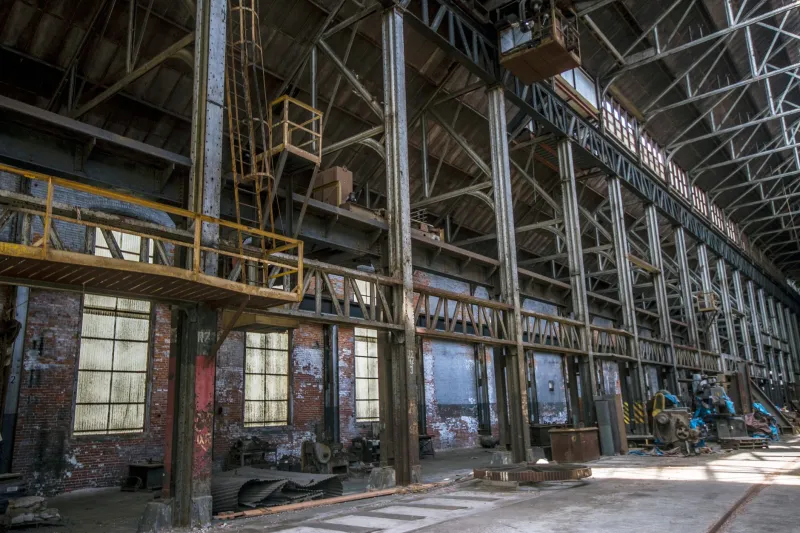
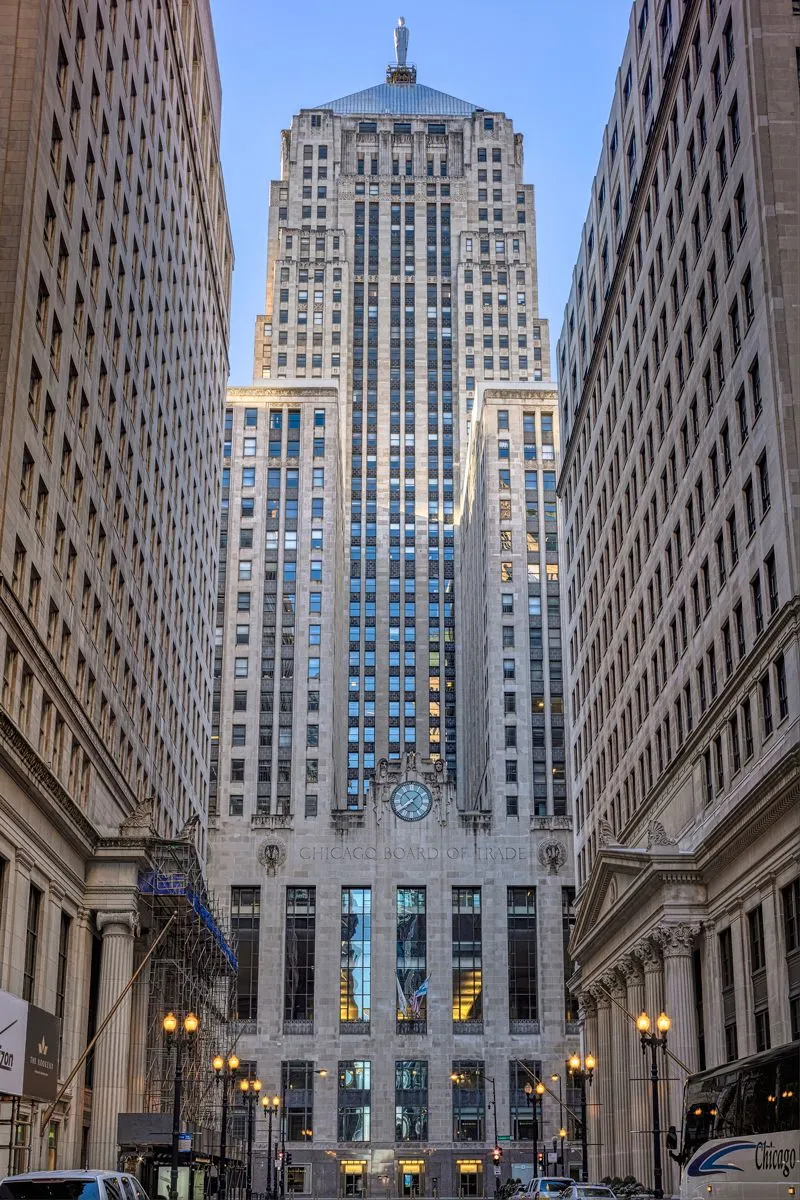 Photo: Chicago Board of Trade, via i.pinimg.com
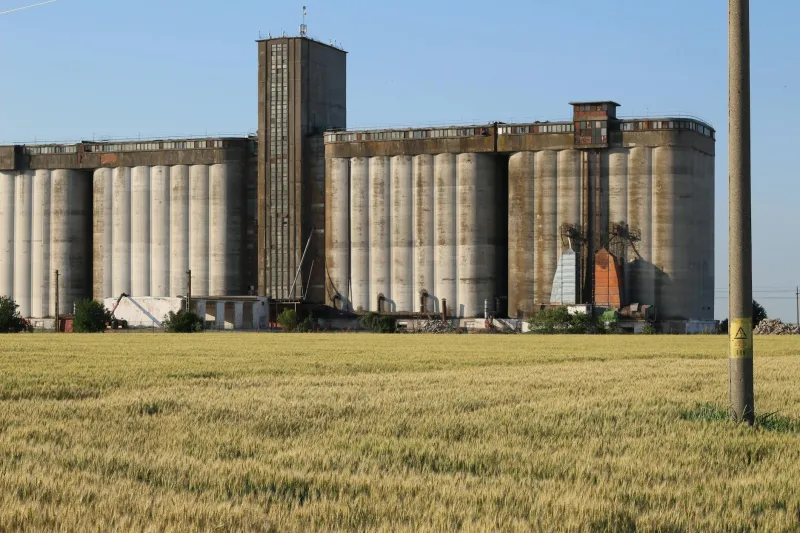
In 1848, a grain elevator operator named Joseph Dart was facing bankruptcy in Buffalo, New York. Not because he lacked customers, but because he had too many — and no way to predict what his inventory would be worth by the time ships arrived to haul it away.
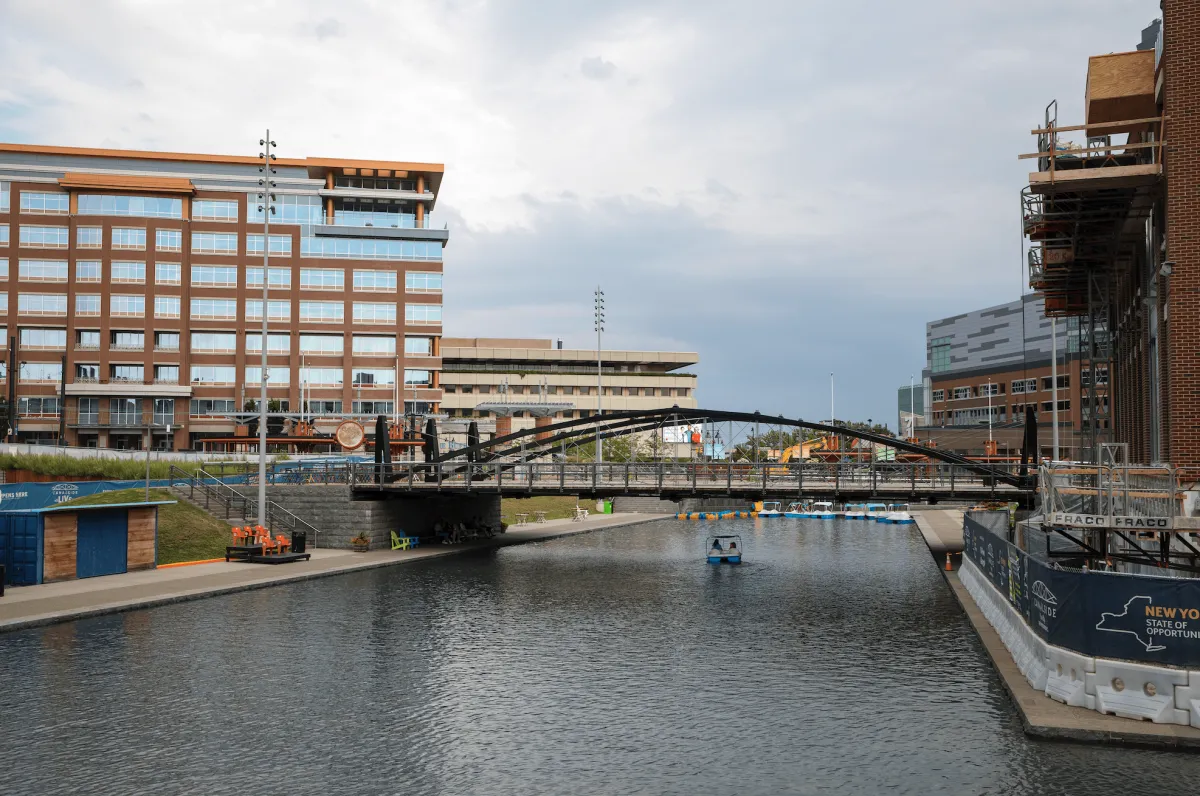 Photo: Buffalo, New York, via buffalowaterfront.com
 Photo: Joseph Dart, via ceres.ai
Dart's solution was elegantly desperate: he started promising farmers specific prices for crops that hadn't been harvested yet.
The Accidental Innovation That Changed Everything
What Dart and dozens of other grain handlers across the Midwest were creating wasn't sophisticated finance — it was survival insurance.
Harvest timing was everything in the 1800s. Farmers who brought grain to market immediately after harvest glutted the system, driving prices into the dirt. Those who waited risked spoilage, transportation delays, or worse prices if other regions had better yields.
Grain elevator operators faced the opposite problem. They needed steady inventory to keep their facilities profitable, but had no way to predict supply or demand more than a few weeks ahead.
So they started making deals that seemed crazy at the time: "Bring me 1,000 bushels of corn in October, and I'll pay you today's price plus 10 cents, regardless of what the market does."
Farmers got price certainty. Elevator operators got guaranteed supply. Neither side realized they were writing the first commodity futures contracts in American history.
From Handshakes to Hard Currency
By the 1850s, these informal agreements had evolved into something more sophisticated. Chicago grain merchants began standardizing contract terms — specific grades of wheat, delivery dates, penalty clauses for non-performance.
More importantly, they discovered these contracts themselves had value. A grain dealer holding a contract to buy wheat at $1.20 per bushel could sell that contract to someone else if market prices rose to $1.40. The difference represented pure profit without ever touching a single grain of wheat.
This realization transformed everything. Suddenly, farmers weren't just selling crops — they were selling promises. Grain dealers weren't just moving physical commodities — they were trading risk itself.
The Chicago Board of Trade, founded in 1848 as a simple grain merchants' association, became the epicenter of this new form of commerce. By 1865, standardized futures contracts were being traded as actively as the underlying commodities.
The Ripple Effect Nobody Saw Coming
What started as a practical solution for grain storage quickly spread to other industries facing similar uncertainty.
Cattle ranchers in Texas began using futures contracts to lock in beef prices before driving herds to Chicago stockyards. Cotton farmers in the South used similar agreements to guarantee prices before planting seasons. Lumber companies in the Pacific Northwest started trading timber futures to manage seasonal demand fluctuations.
Each industry adapted the basic concept to their specific needs, but the underlying logic remained the same: convert unpredictable future value into predictable present value.
How Your Grocery Bill Became a Derivatives Trade
Today, those muddy handshake agreements have evolved into a global system that influences the price of virtually everything Americans buy.
When you purchase bread at the grocery store, you're paying a price that was partially determined months earlier by futures contracts on wheat, corn, and soybeans. The gasoline in your car reflects crude oil futures traded by investors who may never see an actual barrel of oil. Even your morning coffee price is influenced by futures contracts on beans that haven't been picked yet.
The modern futures market processes over $400 trillion in notional value annually — roughly 20 times the entire U.S. economy — all descended from those desperate attempts by 1800s grain handlers to manage inventory risk.
The Irony Wall Street Won't Admit
Here's what makes this history particularly fascinating: the financial innovation that now powers Wall Street's most sophisticated trading strategies was created by people who would have been horrified by modern financial complexity.
Those grain elevator operators weren't trying to create new asset classes or generate trading profits. They were trying to run sustainable businesses in an industry where a single bad harvest could mean bankruptcy.
Their "innovation" was actually anti-speculation — a way to remove uncertainty and price volatility from agricultural commerce. The fact that it eventually enabled massive speculation would have struck them as a perversion of their original intent.
What the Farmers Got Right (That Finance Still Struggles With)
The original futures contracts created by Midwest grain handlers had something modern derivatives often lack: clear connection to real economic value.
Every contract represented actual crops, grown by real farmers, sold to feed actual people. The financial engineering served the underlying economic activity, not the other way around.
When grain elevator operators agreed to buy corn at predetermined prices, both parties understood exactly what they were trading and why. Compare that to modern financial derivatives, where the connection between the contract and underlying economic reality can be nearly impossible to trace.
The Tool That Built America (One Bushel at a Time)
Those accidental innovations by desperate farmers and grain handlers didn't just create new financial instruments — they enabled the entire American agricultural expansion.
Futures contracts allowed farmers to secure financing for land purchases and equipment investments based on projected crop values. They enabled railroad companies to plan transportation capacity around predictable grain shipments. They gave food processors the price certainty needed to make long-term production commitments.
Without futures contracts, the rapid agricultural development that fed America's westward expansion would have been far riskier and slower. The financial tool that Wall Street now uses for sophisticated trading strategies originally existed for a much simpler purpose: helping farmers feed a growing nation.
Next time you see futures prices scrolling across a financial news ticker, remember: you're looking at the direct descendants of handshake deals made in muddy Illinois grain elevators by people who just wanted to stay in business long enough to see the next harvest.