The Route Book Was the Credit Report: How Milk Delivery Drivers Knew Your Financial Soul
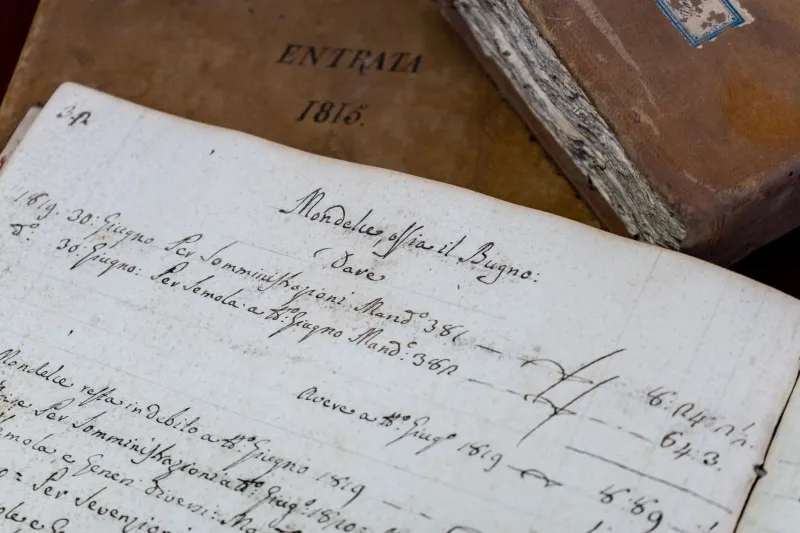
Somewhere in a dusty archive in Ohio, there's probably a milk route book that knows more about a family's financial character than their bank ever did.
It wouldn't look like much. A cloth-covered ledger, maybe five inches wide. Names penciled in order down each page — Mrs. Kowalski, the Hendersons, old Mr. Briggs — with columns of numbers tracking quarts delivered, amounts owed, and payments made. But flip to the back pages of a route driver's personal notes, and you'd find something the credit bureaus wouldn't invent for another fifty years: informal risk assessments, scrawled in shorthand, about who could be trusted and who couldn't.
These men — and they were almost always men — weren't bankers. They were delivery drivers. But for millions of American families between roughly 1900 and 1960, the milkman or bread route driver was the closest thing to a neighborhood credit officer they'd ever meet.
The Float That Nobody Named
Here's the thing most people miss about home delivery in early 20th-century America: it wasn't a cash-on-the-doorstep business. It ran on a weekly or biweekly settlement system, which meant the driver extended credit to every single customer on his route, every single day, before he ever saw a dime.
A family receiving two quarts of milk daily, plus butter and cream on weekends, could easily rack up several dollars of product before payday arrived. For working-class families living on weekly wages, that float wasn't a convenience — it was a financial lifeline. The milkman was, functionally, running a micro-lending operation, and he knew it.
What kept the system honest wasn't a contract or a credit check. It was the route book and the driver's memory.
What the Notebook Actually Tracked
Former dairy workers interviewed in regional oral history projects describe route books that went well beyond simple accounting. Drivers noted payment patterns with obsessive precision. Did Mrs. Kowalski always settle on Friday, or did she let it drift to Monday? Did the Henderson account balloon every December and get paid down in January — a reliable seasonal pattern — or did it just keep growing with no obvious ceiling?
Some drivers developed their own shorthand ratings. A small checkmark meant reliable. A question mark meant watch this one. A circled dollar sign, according to one retired driver from a Pennsylvania dairy cooperative, meant "extend nothing more until they catch up."
The system had something modern credit scores still struggle to capture: behavioral context. A customer who was consistently two weeks behind but always paid in full was considered a better risk than one who paid on time sporadically but had a habit of disputing charges. Pattern mattered more than punctuality.
The Network Behind the Notebook
Route drivers didn't work in isolation. They talked.
At the dairy depot every morning — the loading dock where drivers picked up their stock before dawn — information moved fast. If a family on Route 7 had skipped town leaving a balance, every driver in the district knew by 5 a.m. If a new family moved onto a block with a solid reputation from another town, that news traveled too. Drivers who'd worked the same neighborhood for years carried institutional knowledge that no formal database could replicate.
Dairy companies formalized this in surprising ways. Some regional operations kept centralized "skip lists" — essentially early default registries — that were updated weekly and distributed to route drivers across the territory. A family that burned one dairy couldn't simply switch to a competitor without the new driver knowing about it within a week. The network was informal but remarkably efficient.
In tightly-knit immigrant communities, the system had an added layer. A Greek driver on a Greek neighborhood route, or an Italian driver covering an Italian block, brought cultural and linguistic context to every credit decision. He knew which families had relatives who'd co-sign informally. He knew which households had seasonal income from factory work that would spike in certain months. He knew, frankly, who drank too much and who was quietly saving to buy a house.
Why Their Default Rates Were Remarkably Low
Here's the number that should make every fintech startup uncomfortable: historians and dairy industry researchers who've looked at the records suggest that default rates on route credit in stable communities were extraordinarily low — some estimates put genuine write-offs below two percent in normal economic periods.
For context, modern unsecured consumer credit regularly sees default rates of five to ten percent or higher, despite sophisticated scoring models, income verification, and algorithmic underwriting.
The milkman's advantage was relational accountability. Defaulting on a milk bill wasn't like missing a credit card payment to a faceless lender in Delaware. It meant the guy you waved to every morning stopped leaving bottles on your stoop. It meant your neighbors noticed. In communities where reputation was a form of currency, the social cost of stiffing the milkman was genuinely high.
Drivers also had flexibility that modern lenders don't. A family going through a hard stretch could get an informal extension — no late fee, no ding on a report — with the quiet understanding that they'd make it right when things improved. That kind of human discretion, applied by someone with real knowledge of a customer's circumstances, reduced defaults in ways that rigid algorithmic systems simply can't replicate.
What Got Lost When the Trucks Stopped Running
Home delivery declined sharply through the 1960s and 1970s as supermarkets ate into dairy margins and car ownership made the weekly grocery run practical for most families. By 1975, the route book was mostly a relic.
What disappeared with it wasn't just a delivery system. It was a model of community-embedded credit that understood people as neighbors rather than risk profiles. The knowledge those drivers carried — about seasonal income patterns, family stability, and the difference between someone who was broke and someone who was irresponsible — evaporated when the routes shut down.
Fintech companies today spend billions trying to build "alternative credit data" systems that account for exactly these kinds of nuances: payment behavior on utilities, rental history, even social patterns. The milkman had all of that, encoded in pencil, for the cost of a route book and forty years of early mornings.
Some things, it turns out, scale down better than they scale up.