Two Sets of Books: The Farming Families Who Hid Their Real Wealth in Plain Sight
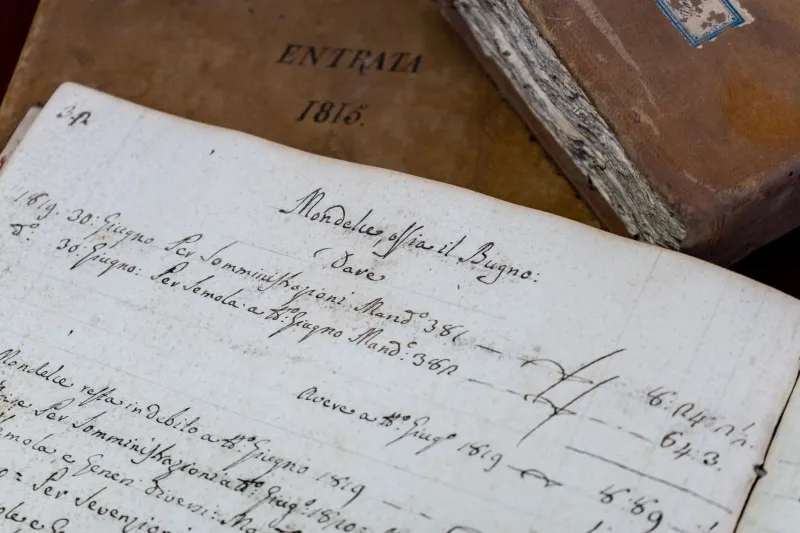
If you ever stumble across an old farmhouse estate sale in rural Virginia or Kentucky and find two ledgers tucked into the same drawer, don't assume one is a duplicate. You might be holding a window into one of the most quietly sophisticated financial systems ordinary Americans ever built.
For much of the 19th century and well into the early 20th, farming families across the rural United States operated what economic historians sometimes call a "dual accounting" system. There was the official ledger — the one kept tidy for county tax assessors, creditors, and anyone else with authority who might come asking questions. And then there was the real book. The private one. The one that captured how a family actually lived, traded, saved, and quietly accumulated.
The gap between those two records was, for many families, the difference between poverty and stability.
Why the Official Numbers Were Always Wrong
To understand the dual ledger, you have to understand how rural taxation worked in 19th-century America — which is to say, badly and arbitrarily.
Property taxes in most states were assessed by locally appointed officials who had enormous discretion. They walked your land, eyeballed your livestock, poked around your barn, and wrote down a number. That number determined what you owed the county. Unsurprisingly, the system invited both corruption and creative interpretation.
Families who appeared prosperous got assessed higher. Families who appeared to be scraping by got some relief. The incentive to look poor on paper was, for many rural households, a completely rational response to a capricious system.
But there was a deeper issue. The official economy that tax assessors measured — cash income from crop sales, recorded property values, documented livestock counts — captured only a fraction of how rural families actually functioned. A significant portion of a farm family's real financial life happened entirely outside the cash economy, and no tax form in existence had a line for it.
The Barter Economy That Never Showed Up on Paper
In rural communities before widespread banking and reliable cash wages, barter wasn't a quaint alternative to money. It was the primary mechanism of economic life.
A family might trade surplus corn for a neighbor's carpentry labor. They'd exchange preserved vegetables for a share of the butchering when a neighbor slaughtered a hog. Wool for weaving, seeds for fence-mending, a week of harvest help returned in kind the following season. None of this showed up in official accounts. None of it was taxable. And none of it was invisible to the families involved.
The private ledger tracked all of it.
These "true books," as some families called them in letters and diaries that have survived, recorded the full web of obligations and assets that constituted a family's real economic position. Who owed them labor. What they'd promised in trade. Which neighbors had drawn on their surplus and could be expected to reciprocate. What the root cellar actually held versus what the tax assessor had been told it held.
Some of these private records were extraordinarily detailed. Agricultural historians examining estate papers from Appalachian and Midwestern families have found handwritten ledgers that tracked barter transactions with the same precision a merchant would apply to cash accounts — items, quantities, dates, and running balances of who was ahead and who owed.
The Strategic Poverty Play
Beyond barter, the dual system served another function: asset concealment in plain sight.
This wasn't fraud in the dramatic sense. It was strategic presentation — a family art form passed down through generations in communities where distrust of outside authority was a survival instinct as much as a cultural value.
A family with a productive orchard might report a fraction of its yield if they sold most of it through informal channels — trades with neighbors, small roadside transactions, preserved goods exchanged at church socials. A family with forty hogs might report thirty. The unreported ten weren't hidden in any dramatic way. They were just never mentioned, and no assessor was going to count every animal on a large spread.
Meanwhile, the private ledger told the truth. It showed the real herd count, the real harvest, the real value of what was stored, traded, and held. That private picture of family wealth was what informed actual decisions: whether to expand, whether to take on debt, whether they could afford to let a neighbor defer a barter obligation for another season.
The official ledger was a performance. The private ledger was the script.
How This Built Generational Stability
There's a reason some rural families accumulated quiet, durable wealth across generations while appearing, on any official record, to be barely getting by. The dual system wasn't just about tax avoidance. It was a comprehensive financial intelligence operation.
By maintaining accurate private accounts, families could make genuinely informed long-term decisions while presenting a conservative face to anyone with the power to tax, foreclose, or otherwise extract. They knew their real net worth. They knew their real obligations. They knew which neighbors were reliable trading partners and which ones were a credit risk.
This knowledge compounded. Families who understood their true financial position could time expansions carefully, avoid overextension, and build land holdings incrementally — often in ways that looked, to outside eyes, like fortunate accident rather than deliberate strategy.
In communities where banks were distant, hostile, or simply untrustworthy, the private ledger was also the family's banking system. It tracked informal loans between neighbors, interest-free arrangements that might span years, and the kind of mutual credit that formal institutions never offered to poor rural families.
What the Tax Man Never Understood
The irony is that these families weren't hiding poverty. They were hiding competence.
The official record showed struggling subsistence farmers. The private record showed sophisticated economic actors managing complex multi-party barter networks, informal credit arrangements, and strategic asset allocation — all without a banker, a broker, or a financial advisor in sight.
Modern economists who've dug into surviving private ledgers from this era often express genuine surprise at their sophistication. These weren't crude tallies. They reflected a nuanced understanding of value, obligation, timing, and risk that any MBA program would recognize, even if the terminology was different.
The dual ledger system faded as cash economies penetrated rural life, as banking became more accessible, and as tax enforcement became more systematic through the 20th century. But the families who ran it longest often left behind the most durable legacies — land, stability, and a quiet financial cushion that their official records never would have predicted.
Sometimes the most valuable financial document a family owned was the one nobody else was ever supposed to read.