The Invisible Farm Asset: How Tobacco Quotas Became Generational Wealth — Until Washington Pulled the Plug
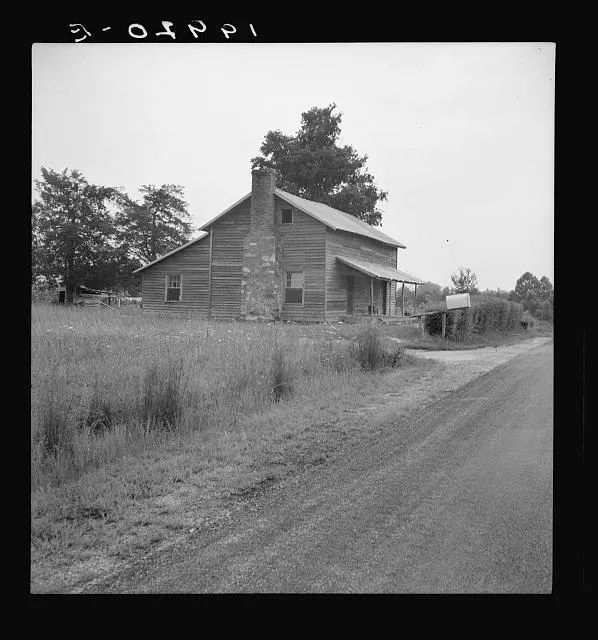
Photo: Dorothea Lange, Public domain, via Wikimedia Commons
If you grew up in rural Kentucky, North Carolina, or Virginia between roughly 1940 and 2004, there's a decent chance your family had a number. Not a bank account number. Not a social security number. A quota number — a government-issued right to grow a specific amount of tobacco, tied to your land, transferable to others, and quietly worth more than most people outside tobacco country ever realized.
It was, in every practical sense, an asset. One the federal government created, one farmers traded and leased like property, and one that built real wealth in communities that didn't have a lot of other ways to build it. And when Washington finally decided the whole program was an anachronism, they wrote checks to buy it back — but the math didn't always add up the way farmers hoped.
How the Government Accidentally Created a Market
The tobacco allotment system was born in the New Deal era, designed not to create wealth but to stabilize prices. The logic was straightforward: if too many farmers grew too much tobacco, prices would collapse and everyone would suffer. The Agricultural Adjustment Act of 1938 set production limits for growers, assigning each eligible farm a specific poundage quota — essentially a license to produce.
What nobody fully anticipated was what would happen when those quotas became transferable.
Over time, the rules evolved to allow farmers to lease their allotments to neighbors or sell them outright. A farmer who didn't want to grow tobacco anymore could rent his quota to someone who did. A family that inherited land could lease the quota attached to it without ever touching a crop. In counties where burley and flue-cured tobacco were the economic backbone, these quotas quietly became one of the most valuable things a family could own — sometimes worth more per acre than the land itself.
A Shadow Asset Class in Plain Sight
By the 1990s, tobacco quota was trading with a sophistication that would surprise anyone who imagined rural farm economics as purely dirt-and-seed. Quota leases had going rates. Buyers and sellers negotiated terms. Lawyers drew up contracts. Banks sometimes accepted quota as collateral.
In some parts of Appalachia and the Carolina Piedmont, a family holding 10,000 pounds of quota might be sitting on an asset worth $15,000 to $20,000 — in communities where that represented a significant chunk of household net worth. Multi-generational farm families had accumulated quota through inheritance, purchase, and lease consolidation over decades. It wasn't flashy wealth. It wasn't stock portfolio wealth. But it was real, documented, and — critically — it was theirs.
The system also created an interesting secondary economy. Farmers who were too old to work their allotments, or who had shifted to other crops, could generate steady income just by leasing quota to active growers. It functioned almost like a passive income stream — the agricultural equivalent of collecting rent.
The Part Washington Never Advertised
Here's what made tobacco quota genuinely unusual as a government-created asset: it was a restriction that became a resource.
The original intent was to limit production. But by making the limits tradeable, the government inadvertently created property rights with real market value. Economists have a term for this — they call it a regulatory asset, a right created by government rules that takes on monetary value precisely because of those rules. Environmental pollution credits work the same way today.
For rural families with limited access to traditional wealth-building tools — stock markets, real estate investment, business capital — the quota system was one of the few government programs that put a tangible, appreciating asset directly in their hands. It wasn't designed that way, but that's how it functioned for sixty-plus years.
The 2004 Buyout: Relief or Robbery?
By the early 2000s, the tobacco program was politically unsustainable. Public health pressure was mounting, domestic tobacco consumption was declining, and imported leaf was undercutting the price supports that made the quota system function. Congress passed the Fair and Equitable Tobacco Reform Act of 2004 — commonly called the Tobacco Buyout — which eliminated the quota program and paid existing quota holders to surrender their allotments.
The buyout wasn't nothing. Quota owners received payments spread over ten years, calculated based on their poundage holdings. For some families, it was a meaningful check. For others, it felt like being paid pennies on the dollar for an asset that had taken generations to accumulate.
The deeper issue was that the buyout payment was calculated on a formula — not on what the market might have valued the quota at had the program continued. Families who had paid market rates to purchase quota in the years before the buyout often found that their acquisition cost exceeded what they received in compensation. The government that created the asset also set the exit price, and it wasn't a negotiation.
What the Tobacco Quota Story Actually Teaches
It would be easy to frame this as a cautionary tale about trusting government-created asset classes. And there's something to that. Any asset whose value depends entirely on a regulatory framework can evaporate when that framework changes.
But the more interesting lesson might be about what the system revealed: that ordinary rural families, given a tradeable right — even one born from restriction — will find ways to turn it into wealth. They'll lease it, sell it, inherit it, collateralize it, and build multi-generational equity around it. The asset didn't have to be glamorous. It just had to be real and transferable.
The tobacco quota era ended twenty years ago. The families who held those allotments are still out there, some sitting on land that lost a significant piece of its income-generating value overnight. What they built with that quota, in the decades before the buyout, is a story about American rural ingenuity that most financial histories never bother to open.