Before Life Insurance Had Fine Print, Neighbors Were Covering the Funeral: The Mutual Aid Societies Nobody Remembers
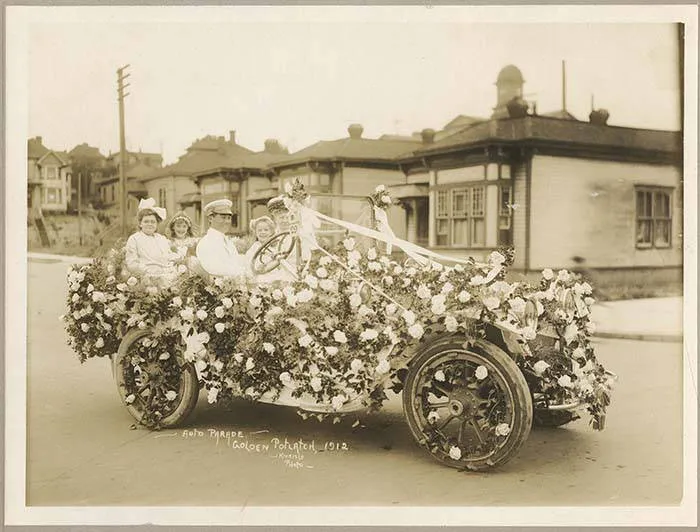
Photo: Kneisle Photo, Public domain, via Wikimedia Commons
For a working-class family in 1890s Pittsburgh or 1910s New Orleans, the fear wasn't just dying. The fear was dying wrong — being buried in a potter's field, in an unmarked municipal grave, because there was no money left for anything better. A pauper's burial was a social humiliation that followed a family for years. It meant you'd failed. It meant you were forgotten.
The insurance industry had solutions, technically. But commercial life insurance in that era was expensive, riddled with exclusions, and operated by companies that weren't always eager to pay out. For the steelworker, the coal miner, the domestic servant, the railroad laborer — the formal insurance market was either out of reach or not to be trusted.
So they built their own system. And it worked.
The Weekly Nickel That Changed Everything
Mutual benefit societies — sometimes called fraternal benefit societies, burial clubs, or death benefit associations — operated on a premise so simple it almost sounds naive: every member paid a small amount regularly, and when any member died, the pool covered the funeral costs and sometimes a modest payment to the surviving family.
The dues were deliberately accessible. In many societies, the weekly or monthly contribution was a nickel or a dime — amounts that even the most marginal wage earner could manage. When a member died, an assessment went out to the full membership, each person contributing a fixed sum toward the funeral benefit. The more members a society had, the smaller each individual's share of any single death, and the more generous the payout could be.
These weren't informal handshakes. Many societies kept meticulous ledgers, elected officers, held regular meetings, and maintained constitutions governing how benefits were paid and disputes were resolved. They were, in the language of modern finance, small mutual insurance companies — except they were run by the policyholders themselves, out of church basements and union halls, without actuaries or shareholders.
Who Was Running These Things?
The breadth of the mutual aid burial society movement is one of its most striking features. Nearly every immigrant community in industrial America had one. Polish steelworkers in Chicago, Italian stonemasons in New York, Greek sponge divers in Florida, Czech miners in Colorado — each group often formed societies organized around shared ethnicity, religion, trade, or neighborhood.
Black communities in the post-Reconstruction South developed particularly robust burial societies, for reasons that went beyond economics. Excluded from white-run insurance companies and facing a social environment that offered few other safety nets, African American families in cities like Atlanta, Baltimore, and Richmond built burial societies that grew into some of the earliest Black-owned financial institutions in the country. Several prominent Black insurance companies of the 20th century — including North Carolina Mutual Life, sometimes called the "Black Wall Street of Insurance" — had direct roots in the burial society tradition.
Women ran societies too, often separately from the male-dominated fraternal orders. Female mutual benefit clubs were common in textile mill towns and domestic worker communities, providing the same death benefits with the same cooperative structure.
The Financial Architecture Was Shrewder Than It Looked
Critics of the mutual aid model — and there were critics, mostly from the commercial insurance lobby — liked to argue that these societies were financially unsophisticated and prone to collapse. And some were. A society that grew too fast, or that attracted an older membership without bringing in younger contributors, could find its assessment costs becoming unsustainable.
But the better-run societies understood something fundamental about risk pooling that commercial insurers also understood: size and diversity mattered. The larger and more demographically mixed the membership, the more predictable the death rate, and the more stable the finances. Many societies solved the sustainability problem by affiliating with larger fraternal orders — the Odd Fellows, the Knights of Pythias, the Ancient Order of United Workmen — that provided a national network of members and a larger risk pool to draw on.
Some societies also evolved beyond burial benefits. They began offering sick pay for members who couldn't work due to illness, small loans at reasonable rates, and widow's pensions. The burial society was often the seed from which a broader mutual aid network grew — a community-run financial safety net that commercial institutions weren't offering to people at the bottom of the wage scale.
Why They Faded — And What That Tells Us
The decline of the burial society was gradual, driven by forces that made it feel inevitable in retrospect. Social Security arrived in 1935 and began providing a baseline financial floor for American workers. The life insurance industry — partly in response to competition from mutual aid societies — improved its products, lowered its rates, and expanded access. The GI Bill and postwar prosperity lifted millions of families into the middle class, where commercial insurance felt normal and accessible.
Fraternal orders also suffered from declining membership as ethnic communities assimilated and second-generation immigrants no longer felt the same pull toward Old World solidarity organizations. By the 1950s, burial societies in most communities had either dissolved, merged into larger institutions, or transformed into something barely recognizable from their origins.
But here's the thing worth sitting with: the fear that drove people to build those societies never fully went away. The average American funeral today costs somewhere between $7,000 and $12,000. Roughly half of American adults have no life insurance. GoFundMe campaigns for funeral costs are now a common sight on social media — a digital-era echo of the old assessment notice sent around the neighborhood when someone died without enough money to be buried.
The mutual aid burial society was a community's answer to a problem that institutions kept failing to solve. It wasn't perfect. It wasn't permanent. But for several generations of working Americans who had no other option, it was exactly enough — and it was theirs.