The Tab System That Kept Small Towns Fed, Clothed, and Solvent — No Bank Required
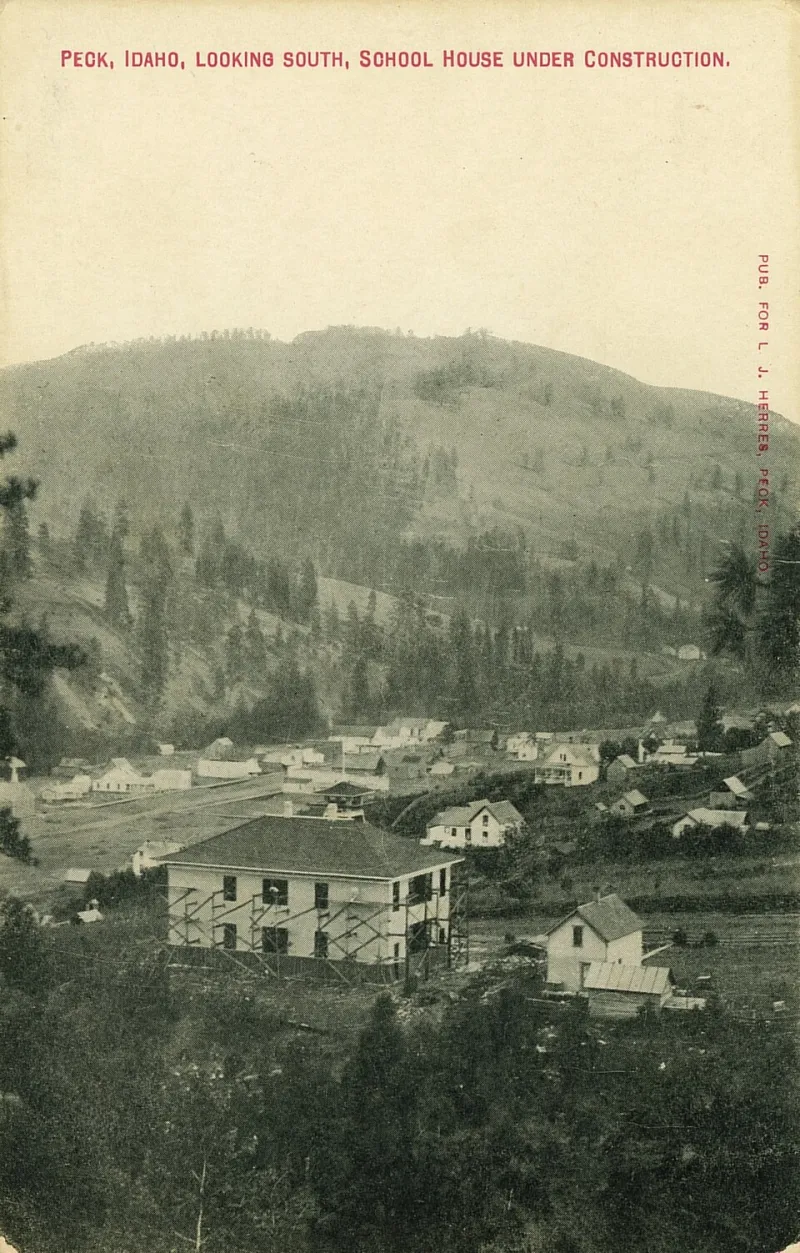
Photo: Steve Shook from Moscow, Idaho, USA, CC BY 2.0, via Wikimedia Commons
Picture a small Midwestern town in 1911. Population maybe 800. One bank, which half the town distrusts. A butcher, a baker, a barber, a dry goods merchant, a blacksmith, and a doctor. And somehow, the whole economy hums along — credit flowing between households and businesses in a web so intricate that an outsider couldn't begin to map it.
No fintech. No credit bureau. No interest rate disclosures.
Just memory, reputation, and an unspoken agreement about how things worked.
The Mental Ledger
The butcher knew that the schoolteacher hadn't paid for last month's pork roast, but also knew she'd tutored his daughter through geometry. The baker kept a running tab for the blacksmith, who shod the baker's horse at a discount every spring. The barber cut hair for the doctor's family on a handshake understanding that medical visits for his kids would be handled quietly.
This wasn't chaos. It was a system — just one that existed almost entirely in people's heads and in the occasional penciled notation in a shop ledger.
Economists who've studied these arrangements call them "closed-loop credit networks" or "mutual credit systems," but those terms make something deeply human sound clinical. What they actually were was a community-scale accounting of favors, skills, and goods — a living spreadsheet maintained by social trust.
How the Accounting Actually Worked
The mechanics varied by town and by trade, but a few patterns showed up consistently across rural America in the late 19th and early 20th centuries.
First, most transactions weren't settled immediately. Goods and services were extended on credit, with an informal expectation of reciprocal exchange over time. The butcher didn't hand you a bill every week — he kept a mental or written tally, and you'd settle up in cash, in kind, or in labor when the balance got uncomfortable.
Second, the system was self-regulating through reputation. If you consistently failed to hold up your end, word traveled fast in a town of 800. You'd find that the baker was suddenly out of your usual bread, that the barber's schedule was mysteriously full. Social exclusion was the enforcement mechanism — and it worked.
Third, certain individuals served as informal clearinghouses. The general store owner, in particular, often functioned as a kind of community bank — extending credit to farmers in the spring, accepting payment in grain after harvest, and effectively setting the exchange rates between goods and labor. These merchants weren't bankers by title, but the function was nearly identical.
What Made It Work That Modern Systems Can't Replicate
Here's the part that frustrates everyone who's tried to rebuild these systems in the modern era: the technology was never the point.
Alt-currency movements, local exchange trading systems (LETS), time banks, and community scrip experiments have been popping up since the 1980s. Most of them sputter out within a few years. The founders usually blame adoption rates or technical problems. But the real issue is almost always social infrastructure.
The original closed-loop economies worked because everyone in the network had deep, ongoing, multi-generational relationships with each other. The butcher knew the baker's father. The barber had grown up three houses from the blacksmith. Reputation was built over decades and inherited from family. Trust wasn't a feature you added to the system — it was the system.
Modern alt-currency experiments try to build that trust through software, through ratings systems, through blockchain verification. And they keep discovering that you can't engineer your way into a relationship that took forty years to build.
The Thing That Killed It
These networks didn't collapse because of a flaw in the model. They collapsed because the world around them changed faster than they could adapt.
Rural electrification brought catalog shopping. Improved roads brought chain stores. Chain stores offered lower prices and didn't care about your reputation — they just wanted cash. The social penalty for defecting from the local network shrank as alternatives multiplied.
The Great Depression accelerated the collapse. When cash became genuinely scarce, many of these informal credit arrangements froze — not because the trust was gone, but because the underlying goods and labor had dried up too. Some towns tried to formalize their barter systems into local scrip currencies, with mixed results. Most simply dissolved back into the cash economy as federal relief programs arrived.
By the postwar era, the knowledge of how to run a closed-loop community economy had largely passed out of common practice. The people who'd managed those mental ledgers retired or died. Their children grew up in a world of supermarkets and savings accounts and had no reason to learn the old arithmetic.
The Lesson That Keeps Getting Ignored
Every few years, a new wave of community currency enthusiasm sweeps through progressive economic circles. The pitch is always roughly the same: let's build local resilience, reduce dependence on banks, support small businesses, keep money circulating in the community.
All good instincts. But the historical record suggests that the infrastructure question isn't about the currency — it's about the relationships. The small towns that ran functional closed-loop economies for generations weren't doing it because they had clever accounting tools. They were doing it because they had no choice but to know each other deeply.
That's the part nobody wants to hear. You can't download community trust. You have to build it the slow way — one transaction, one favor, one remembered debt at a time.
The butcher and the baker already knew that. They just didn't write a white paper about it.