They Paid for Funerals Their Whole Lives — And Sometimes Never Saw a Dime
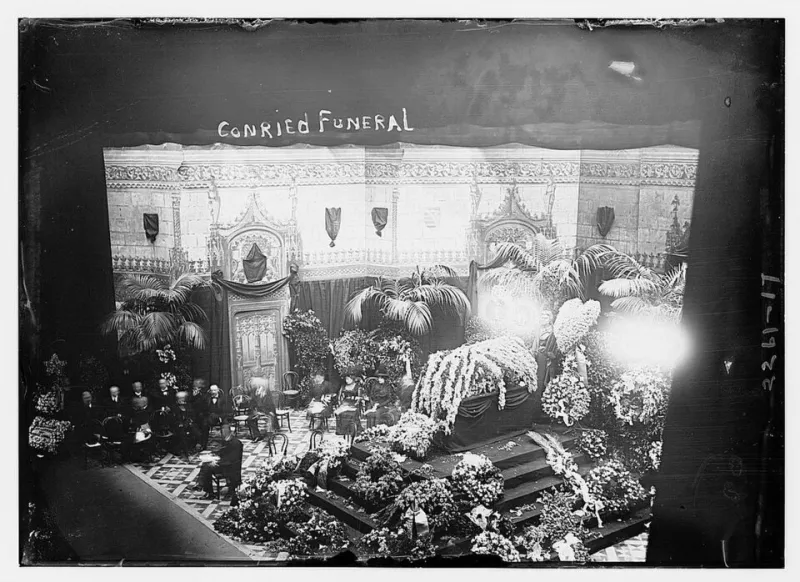
Photo: The Library of Congress, No restrictions, via Wikimedia Commons
Every Monday morning, he came to the door. The debit agent — that's what the insurance companies called him — would knock at tenement apartments across Pittsburgh, Baltimore, Chicago, and a hundred other American cities, collecting nickels and dimes from working-class families who couldn't afford to miss a payment.
The product he was selling was burial insurance. The pitch was simple and devastating in its emotional logic: pay a few cents a week, and when someone in your family dies, you won't have to bury them in a pauper's grave.
For millions of immigrant and working-class families in the early 1900s, that was enough. They paid. And paid. And paid.
The Fear That Built an Industry
To understand why burial insurance became one of the most widely purchased financial products among working-class Americans, you have to understand what a pauper's funeral meant in that era.
A pauper's burial meant a pine box. It meant a plot in a section of the cemetery reserved for the destitute. It meant no service, no dignity, no marker. In communities where religious tradition, family honor, and social standing were intertwined with how you were laid to rest, a pauper's burial was a profound shame — one that could follow a family's reputation for years.
Insurance companies understood this perfectly. Their marketing didn't emphasize financial planning or asset protection. It emphasized dignity. It emphasized the faces of grieving children. It emphasized what kind of person you were if you let your mother go into the ground without a proper funeral.
The emotional hook was nearly impossible to resist.
How the Math Was Designed to Fail You
Here's what the debit agent didn't explain at the door.
Burial insurance policies were written in small denominations — often $100 to $500 in coverage — but the premiums were calculated at rates that were, by actuarial standards, wildly inflated. A policy that might cost a middle-class family a few dollars a year in a standard life insurance product was sold to working-class families on a weekly collection basis that made the annual cost two to four times higher.
The collection model itself was part of the problem. Weekly door-to-door collection meant high administrative overhead, which the companies passed directly to policyholders. Agents earned commissions on renewals, which gave them every incentive to keep policies active — even when the cumulative premiums had long since exceeded the death benefit.
Then came the lapse provisions. Miss a payment — even one — and many policies would lapse entirely, forfeiting everything paid to date. In a household where the weekly budget was measured in coins, a single bad week (sickness, a lost shift, a broken window) could wipe out years of payments. The companies banked on this. Literally.
Studies conducted in the 1910s and 1920s by early consumer advocates found that in some urban markets, the majority of burial insurance policies issued to working-class families lapsed before paying a claim. The premiums collected vastly exceeded the benefits paid out — not because the actuarial model was conservative, but because the lapse rate was engineered into the product design.
The Agents at the Door
The debit agent system deserves its own examination, because it was a masterpiece of low-friction extraction.
Agents were assigned specific routes — sometimes called "debit books" — covering a set of city blocks or tenement buildings. They collected weekly, built personal relationships with families, and were often trusted figures in the community. Some genuinely cared about their clients. But the structure of their compensation pushed in a different direction.
Agents earned more for writing new policies than for servicing old ones. They earned commissions on lapsed policies that were rewritten — which meant that when a family's policy lapsed, the agent had a financial incentive to sell them a new one rather than help them reinstate the old one. A family might pay premiums for a decade, lapse once, and find themselves starting from zero with a new policy — and a smiling agent at the door.
This dynamic was documented by progressive-era reformers, most notably in the work of journalist Elizabeth Hughes and in the investigations of early state insurance commissioners. But the industry was politically powerful, the customer base was politically marginal, and meaningful regulation was slow to arrive.
The Blueprint That Payday Lending Borrowed
The structural parallels between early burial insurance and modern payday lending are striking — and almost entirely undiscussed in mainstream financial history.
Both products target populations with limited access to mainstream credit. Both use emotional or urgent framing to drive purchase decisions. Both are structured so that the cost of carrying the product over time far exceeds the nominal benefit. Both rely on high lapse or rollover rates to generate profit. And both depend on frequent, small-dollar collection that makes the true annual cost psychologically invisible to the customer.
The payday lending industry didn't invent these mechanics. It inherited them — though probably not consciously — from a century of precedent in the industrial-era insurance market.
What's particularly striking is that burial insurance was eventually reformed, at least partially. The Armstrong Investigation of 1905, which examined the life insurance industry broadly, helped expose some of the worst practices. State regulators gradually tightened lapse provisions and required clearer disclosure of terms. The industry survived, but the most predatory structures were curtailed.
The lesson that reform was possible — and that it came from sustained investigative pressure and regulatory action — is one that consumer advocates in the modern payday lending space have had to rediscover from scratch, without the benefit of knowing that someone already fought this exact fight a hundred years ago.
The Nickel That Never Came Back
There's a particular kind of financial trap that works not because it's hidden, but because the alternative feels unthinkable. The families who paid those weekly premiums weren't naive. They knew the math was probably bad. But the image of a pauper's grave was worse than any interest rate.
That's the oldest trick in predatory finance: make the cost of not buying feel higher than the cost of buying. The debit agent at the door was selling peace of mind — and charging a fortune for it, in nickels, every Monday morning, for the rest of your life.
Some things, it turns out, don't change much.