Someone Was Watching Before the Internet Made That Normal
Imagine applying for a loan and finding out the lender already knows you've been drinking too much on weekends, that your wife thinks you're irresponsible with money, and that you once owed a tailor in Cincinnati $12 that took you eight months to pay back.
This wasn't a dystopian thought experiment. For most of the 19th century and well into the 20th, this was just how American credit worked.
Long before FICO scores or Equifax, a parallel intelligence network quietly tracked the financial character of ordinary Americans — and the information it collected was far more personal, far more subjective, and far more invasive than anything a modern algorithm would dare to formalize.
The Birth of the Character Ledger
The story starts in the 1840s, when a New York silk merchant named Lewis Tappan had a genuinely clever idea born of frustration. His business extended credit to customers across the country, and he kept getting burned by people who looked creditworthy on the surface but had hidden histories of default and debt-dodging.
In 1841, Tappan founded the Mercantile Agency — the first formal credit reporting organization in American history. His model was simple and slightly unnerving: hire local correspondents in cities and towns across the country to gather information on businesspeople and consumers. Report back. Compile it. Sell access to merchants and lenders who needed to know who they were dealing with.
What those correspondents reported back was not just financial data. It was character data.
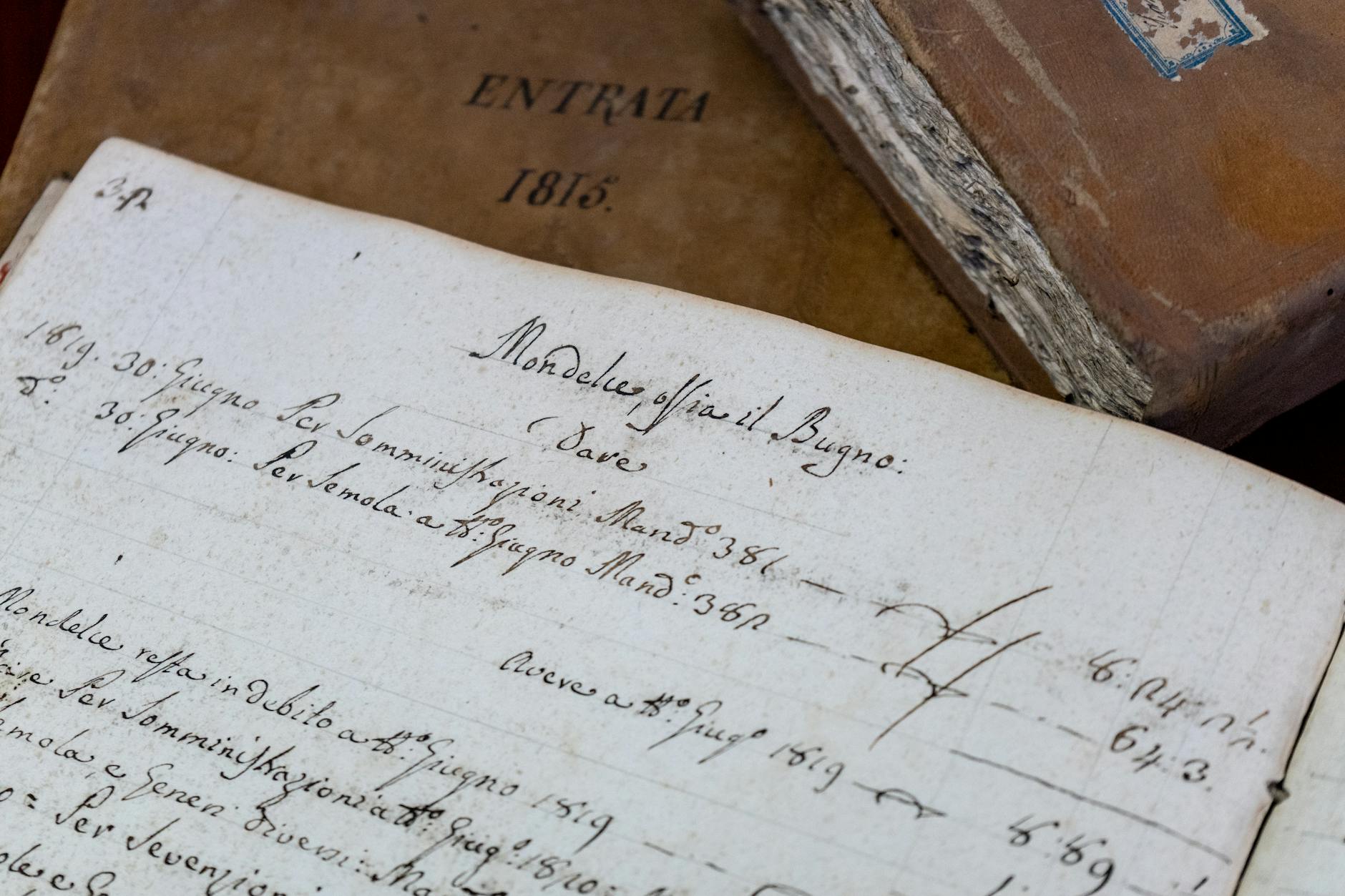
The ledgers they kept — handwritten, privately held, and passed between subscribers like a financial gossip network — included notes on a person's sobriety, their church attendance, the stability of their marriage, whether their neighbors respected them, and how they treated employees. A man who drank heavily got noted. A woman whose husband had a wandering eye got noted. Someone who had moved towns suddenly without explanation? Definitely noted.
The Criteria Were... Something
To a modern reader, the standards these agencies used feel like a mix of reasonable caution and breathtaking absurdity.
On one hand, tracking whether someone had a pattern of unpaid debts made obvious sense. On the other hand, some of the factors that influenced creditworthiness in these ledgers included:
- Race and national origin — openly and without apology. Black Americans, recent immigrants, and Catholics were routinely marked down regardless of their actual financial behavior.
- Marital status and perceived domestic stability — a man going through a divorce was considered a credit risk almost automatically.
- Social standing — being liked by the "right" people in town could offset actual financial red flags.
- Physical appearance and manner — some correspondents literally commented on whether a person looked trustworthy.
The system wasn't designed to be fair. It was designed to be useful to lenders — and in 19th-century America, those two things were rarely the same.
How It Actually Worked Day-to-Day
By the late 1800s, Tappan's original Mercantile Agency had evolved into R.G. Dun & Company (which you may recognize as half of the eventual Dun & Bradstreet), and competitors had emerged across the country. Together, these agencies maintained files on millions of Americans and sold subscription access to merchants and banks.
If you were a dry goods merchant in St. Louis and a stranger walked in wanting to open a line of credit, you could — for a fee — wire a query to your regional mercantile agency and receive back a coded rating that summarized the stranger's financial character. The codes were deliberately opaque, readable only to subscribers who had the key.
There was no appeals process. No way to see your own file. No mechanism to correct errors. If the local correspondent in your town had a grudge against you, or simply got you confused with someone else, that misinformation could follow you across state lines without your knowledge.
Sound familiar? It should. The parallels to modern credit reporting — opaque systems, difficult-to-dispute errors, structural bias — are not coincidental. They're foundational.
The Line to Today
The Fair Credit Reporting Act of 1970 was, in many ways, a direct response to the abuses that had accumulated over more than a century of character-ledger-style reporting. It gave consumers the right to see their files, dispute errors, and limit what could be reported. FICO scores, introduced in 1989, attempted to replace subjective judgment with mathematical objectivity.
But critics of modern credit scoring argue the ghost of the character ledger never fully left the building. Zip code data, which correlates heavily with race, influences credit decisions. Employment history — which reflects structural inequality as much as individual behavior — is baked into scoring models. The names of the biases changed, but the underlying architecture of "some people are just inherently riskier" didn't disappear. It got quantified.
There's a growing movement among economists and fintech researchers to build credit models that look more like what the best padrone bankers and community lenders did — evaluating actual cash flow behavior, rent payment history, and real spending patterns rather than proxies loaded with historical bias.
The Ledger Never Really Closed
There's something almost poetic about the fact that the system designed to eliminate financial uncertainty was itself riddled with uncertainty, prejudice, and error. The character ledger was a human attempt to solve a genuinely hard problem — how do you extend trust to a stranger? — and it got a lot wrong while getting just enough right to survive for a century.
The lesson isn't that data-driven lending is bad. It's that the data we choose to collect, and the assumptions baked into how we collect it, always reflect the values of whoever built the system.
Worth remembering the next time you check your credit score.