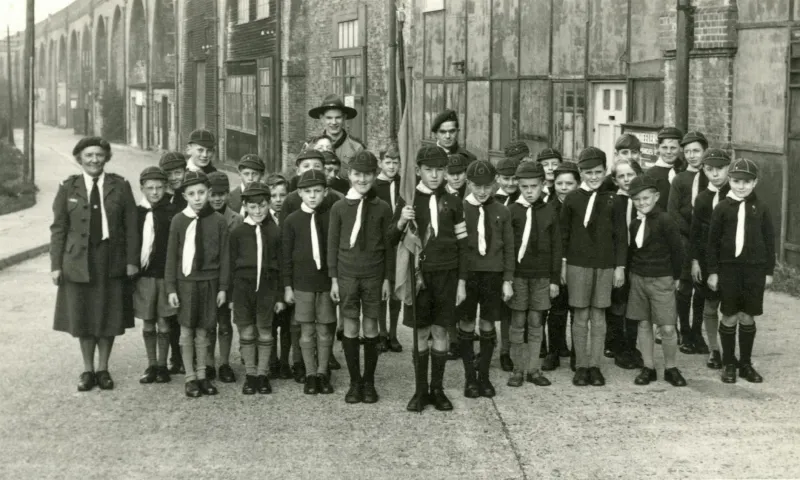
Picture this: it's 1932. The bank on your corner just closed. The factory where your neighbor worked shut down last spring. Nobody has cash, but everyone still needs groceries, haircuts, and shoes for the kids. So what do you do?
If you were an ordinary American during the Great Depression, you improvised. And not in a small, scrappy way — in a surprisingly organized, surprisingly sophisticated way that most history classes completely skip over. Forget bread lines for a second. The real story of Depression-era survival is about a shadow economy so inventive that parts of it are quietly running in American cities right now.
The Town That Printed Its Own Money
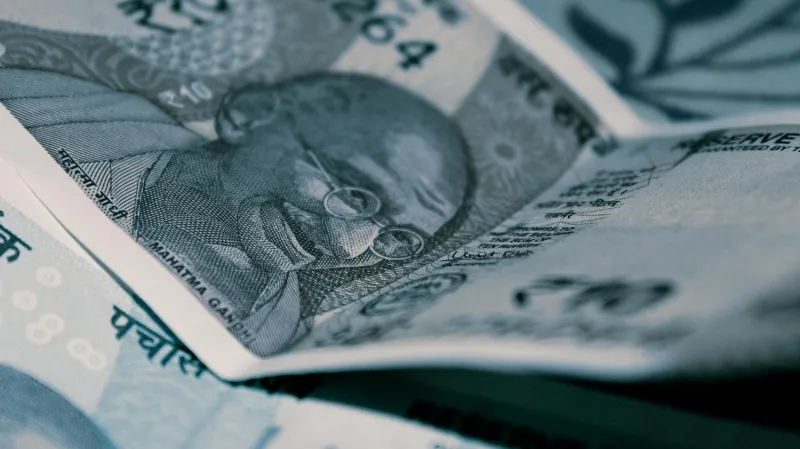
Let's start with the part that sounds like it belongs in a fever dream: during the Great Depression, hundreds of American towns, counties, and companies printed their own currency.
It was called scrip, and it was more common than almost anyone realizes. When banks failed and federal dollars became scarce, local governments and employers issued paper certificates that could be exchanged for goods and services within a defined community. The town of Tenino, Washington, famously printed scrip on thin slices of wood — actual wooden money — when its only bank collapsed in 1931. Merchants accepted it. It worked.
Company scrip wasn't new (coal companies had used it for decades, often exploitatively), but Depression-era municipal scrip was different. It was a genuine community survival tool. Some versions even had built-in expiration dates to encourage spending and keep local money circulating — a concept economists call demurrage that still gets debated in monetary policy circles today.
The federal government eventually cracked down on local currencies as the New Deal took hold. But for a few wild years, America had dozens of parallel monetary systems running simultaneously. Your dollar in Tenino might literally be made of wood.
The Lending Circle Nobody Talks About
Here's one that'll really get you: long before Venmo, before payday loans, before credit cards, Depression-era working-class communities — particularly immigrant and Black communities — ran something called a rotating savings and credit association. You might hear it called a susu in Caribbean communities, a tanda in Latin American ones, or a hui in Chinese-American neighborhoods.
The mechanics are simple and kind of brilliant. A group of trusted neighbors each contributes a fixed amount of money every week or month. Each round, one member takes the entire pot. Rotate until everyone has had a turn. No interest. No bank. No credit check.
During the Depression, these informal circles kept families from losing homes, funded small businesses, and covered medical emergencies when no other options existed. They ran entirely on social trust — which, it turns out, is a surprisingly durable financial instrument.
What's remarkable is that they never really went away. Rotating savings clubs operate in immigrant communities across the US today, largely invisible to mainstream financial media. And lately, they're spreading beyond their traditional bases. Younger Americans, squeezed by inflation and skeptical of banks, have been quietly rediscovering the model — sometimes through apps like Esusu and Kikoff that have essentially digitized the Depression-era concept and dressed it in fintech clothing.
Barter Networks That Moved Millions
Another piece of the Depression's shadow economy that history glosses over: organized barter, at a scale most people can't imagine.
By 1933, an estimated 75 to 100 barter organizations were operating across the United States, some with thousands of members. The Utah Unemployed Exchange Association facilitated trades between farmers, craftspeople, and service workers across the entire state. In Los Angeles, the Unemployed Cooperative Relief Association grew to over 100,000 members at its peak, running warehouses, farms, and service exchanges.
These weren't just casual swap meets. They were structured economies with their own accounting systems, dispute resolution processes, and — yes — their own internal currencies to track exchanges. People traded dental work for firewood. Haircuts for vegetables. Legal advice for car repairs. It sounds quaint until you realize it was keeping hundreds of thousands of families fed.
Modern versions exist too — time banks, where members exchange hours of service rather than dollars, now operate in communities across the US, often flying completely under the radar.
Why This Is Relevant Right Now
Here's the thing about Depression-era financial creativity: it didn't emerge from desperation alone. It emerged from a specific combination of circumstances — institutional failure, cash scarcity, and communities that still had social trust even when they had no money.
Sound familiar? The post-2008 generation, now dealing with student debt, inflation, and housing costs that have made traditional wealth-building feel like a cruel joke, has been quietly reinventing some of these same tools. Lending circles are growing. Time banks are expanding. Local alternative currencies — now usually digital — are being experimented with in cities from Ithaca to Detroit.
The Depression generation didn't write a financial survival guide. They just built systems that worked, under pressure, with what they had. Most of those systems were never documented in any textbook.
But they worked. And the fact that pieces of them are still running, 90 years later, says something interesting about what financial resilience actually looks like when the official system lets you down.
Sometimes the vault worth opening isn't at a bank. It's in the memory of what your great-grandparents figured out when the banks were all closed.