What Dusty Old Account Books Are Telling Historians About the Economy Nobody Counted
The Numbers That Never Made It to Washington
Every ten years, census takers fanned out across the country with their forms and their questions, trying to capture a snapshot of American economic life. They counted workers, wages, and occupations. They recorded what people said they did for a living and roughly how much they earned.
What they couldn't count was everything else.
The neighbor who fixed your roof in exchange for two months of produce from your garden. The seamstress who took cash for alterations and kept it in a coffee can under the sink. The informal loan between cousins that never touched a bank. The side butchering business that ran on handshakes and never saw a tax form.
For decades, historians assumed these informal transactions were economically marginal — the small change of daily life, not worth worrying about when trying to understand how the American economy actually functioned.
Then researchers started opening the ledgers.
What the Books Actually Contain
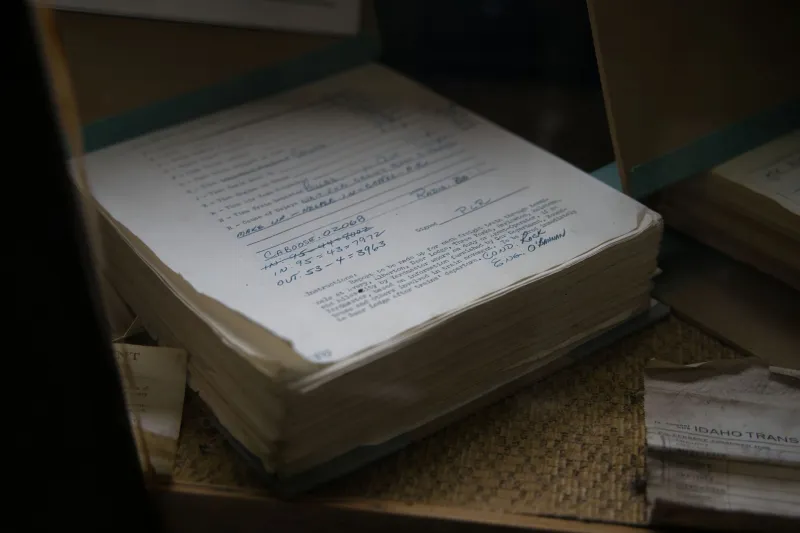
Family account books — the handwritten journals that merchants, farmers, and households kept to track debts and credits before digital records existed — have been quietly accumulating in attics, estate sales, and historical society archives for more than a century. Many of them are beautifully mundane: columns of names, dates, and amounts, written in faded ink by people who never imagined anyone would care.
But when economic historians began systematically analyzing these records in the late 20th century, the picture that emerged was startling.
A general store ledger from rural Virginia, dating to the 1890s, might show hundreds of accounts — but only a fraction of them involved actual cash. The rest were recorded in goods: a cord of wood here, a day's labor there, a side of pork against a debt for seed. The store wasn't just a retail operation. It was functioning as a clearinghouse for a barter economy that ran parallel to the cash economy, completely invisible to any official measurement.
Similar patterns appeared in New England farm records, Midwestern merchant books, and Southern plantation account ledgers. The informal economy wasn't a footnote. In many communities, it was the primary economic system, with the official cash economy layered on top of it.
The Invisible Transactions That Sustained Communities
Researchers who've spent time with these records describe a consistent pattern: communities managed economic stress by expanding the informal economy. When cash dried up — during harvest failures, economic downturns, or regional disruptions — people didn't simply stop transacting. They shifted.
Labor was traded for food. Skilled work was exchanged for housing. Debts were carried forward in social memory and settled years later when circumstances allowed. The formal economy might be in crisis, but the informal one kept moving.
This was particularly visible in the records from the 1870s depression and again during the 1930s. Account books from those periods show a sharp drop in cash transactions and a corresponding increase in recorded exchanges of goods and labor — a documented pivot from one system to another that helped communities absorb shocks that would have been catastrophic if everyone had been purely dependent on wages and cash.
One Massachusetts store ledger from 1933 shows the owner accepting firewood, eggs, and hand-sewn goods against outstanding accounts for months at a stretch. The store stayed open. The community stayed fed. None of it showed up in any economic measurement of the period.
The Lending Networks Nobody Regulated
Perhaps the most revealing entries in old account books are the informal lending records — small loans between neighbors, merchants, and family members that carried no formal terms, no interest calculations, and no legal documentation.
These weren't trivial sums. Researchers examining New England merchant records from the 18th and 19th centuries found that some rural storekeepers were functioning as de facto community banks, carrying outstanding credit for dozens of households simultaneously. The "bank" was a man with a ledger, a reputation for fairness, and a social network that made default genuinely costly — not legally, but socially.
Repayment rates on these informal loans, where researchers have been able to trace them, were often surprisingly high. Not because of legal enforcement — there was none — but because defaulting on a neighbor's loan meant something in a community where you'd see that neighbor at church, at the general store, and at the harvest every year for the rest of your life.
Social capital, it turns out, is a remarkably effective form of collateral.
What Modern Economists Are Still Figuring Out
The study of historical informal economies has taken on new urgency in recent decades, partly because researchers have started recognizing how much the modern informal economy still doesn't get counted.
The Federal Reserve has estimated that the cash-based informal economy in the United States today runs into the hundreds of billions of dollars annually — gig work paid in cash, neighborhood services exchanged informally, family loans that never see a bank. The IRS calls much of this the "tax gap." Anthropologists call it the "gift economy." Economists argue about how to model it.
The old ledgers suggest it's not a modern phenomenon or a product of digital disruption. It's a permanent feature of how communities actually function — one that expands when formal systems fail and contracts when they're accessible and trustworthy.
Reading Between the Lines
There's something almost poignant about sitting with one of these old account books. The entries are so specific — "3 lbs butter, credited against nail account, March 14" — and so completely absent from any official record of the time. The people who made these transactions weren't trying to hide anything. They were just living, managing, trading, borrowing, and repaying in the ways that made sense within their communities.
The census taker couldn't capture any of it. The tax collector never saw most of it. The economic historians of the day didn't know it existed.
But it was there, running quietly underneath the official economy, keeping families solvent and communities intact. The ledger in the attic knew the whole story. It just took us a century to think to ask it.